Sorry, That’s Not My Problem–Religious Edition

Earlier this month I had a patron complain that we held a Meet the Candidates event for the mayoral candidates on Ash Wednesday, and with all due respect (and the respect due him was none because he opted to be a jackass in his complaint), that’s not my problem. Your religious observances are none of my concern.

Your religion is not my problem.

I feel like of all of the public-related things that are not my problem, this is the hardest one for people to fathom. Let me assure you that I respect the existence of your religion, I respect your right to your religion, I respect the requirements, restrictions, and obligations placed upon you by your religion. HOWEVER. Those requirements, restrictions, and obligations are not my problem. They do not apply to me. I am not of your religion.

For example, Judaism, Islam, and some Christian denominations prohibit the eating of pork. I respect that. I would never insist or trick those people into eating pork, and if I were feeding them, I would be mindful that whatever meal I was serving was either pork-free or had pork-free options. However, I’m still gonna eat me some pig. That restriction doesn’t apply to me. I do not belong to any of these faiths.

Like my complainer above. Ash Wednesday is his responsibility, not mine, and not the library’s.

I think it’s the Christians that tend to struggle with this concept the most. Capitalism co-opted a couple of their holidays (Christmas and Easter) to make some bank and now they have it in their heads that their religion should be exclusively catered to. Being the most popular religion in the US doesn’t help their egos, either. If anything, it only encourages them to scream persecution if they don’t get their way.

I’m not persecuting them. I’m not discriminating against them. I’m just not one of them. Their religion is not my problem.

But it seems to be the Christians that work the hardest to make their religion my problem. The “this is a Christian nation” crowd. The “bring back prayer in schools” crowd. The “my religion is the only religion and my god is the only god” crowd. They are fascinating in their disrespect as they swing Bible verses like cudgels to defend their own abhorrent behavior while claiming to love everyone in the name of Jesus. The expect everyone to honor their religion while dismissing and denigrating anyone else’s -or their lack thereof.

It’s just happenstance that Christianity became a major religion. In another timeline, they’d all be beating their Quarans instead of their Bibles, quoting the Islamic prophets instead of the Christian ones. “No, we wouldn’t!” Oh, but, you would. For those people, religion isn’t about faith or spirituality; it’s about power. It’s about their ability to control other people.

That’s the problem we have now. People using their God as justification for control. “The Bible says…” The Bible says a lot of things. The Bible says a lot of contradictory things. The Bible says a lot of things that they ignore for their own convenience (helping the poor, plucking your eyes out, do unto others, false idols, etc.). Ultimately, the Bible says a lot of things that ain’t got shit to do with me because I’m not a Christian. That’s not my handbook.

Your religion isn’t my problem.

Stop trying to make it one.

What Is My Writing Endgame Now?

I feel like it’s important as a creative to check in on myself and my creative goals beyond just what projects I’m working on and what deadlines I need to meet. I’m thinking of the big picture, the reason for my creative existence, as it were.

Basically, what the fuck is the point?

My answer to this question has changed. When I first started pursuing a serious writing career in my late 20s, the goal was getting published. Getting published enough would translate to a stable, successful writing career. That was the endgame. Having a writing career and supporting myself with my writing.

The means changed in the ensuing years, utilizing self-publishing and Patreon as a means of making money and establishing a fanbase that would hopefully help me gain more traditional publishing opportunities. But the endgame remained the same. Have a writing career and support myself with my writing.

At some point, though, the endgame changed. Sort of.

As much as I would love to have a writing career and support myself with my writing, it’s become evident in the last few years that this goal is no longer attainable. Even if the world wasn’t currently on fire, traditional publishing has changed enough that lowlifes like me don’t have a chance of making a career of it. Publishers are more invested in their own profits than their authors, looking mostly for writers that already have an established large following online that will translate to guaranteed sales and justify their shrinking commitment to marketing and promotion.

In short, I will never be popular enough to get published by any of the big, traditional publishers or their imprints. That makes me a much less profitable client to take on as an agent, which means I’m much less likely to land one.

This is already a hard business to break into and I have handicapped myself tremendously by my inability to be popular and, I think, by my lack of education. Every author giving advice in the pages of Writer’s Digest has an MFA. I don’t even have a college degree. There is the also not small issue of me not writing stories that people want to read. Even if I had everything else, my brain doesn’t produces the tales the masses want to consume.

And right now, I’m not even really that interested in writing those stories. I am working on Stateline, of course, but I haven’t been inspired to write a short story in months. I’m more invested in writing poetry at the moment, and that’s an even harder sell. As much as I love writing it and as much as I enjoy reading it, I lack what it takes to be truly good at it.

So what is my writing endgame now?

Honestly, I’m not really sure. The dream of supporting myself with my writing remains in the back of my mind, but right now, the writing is more for myself and for the small group of readers who’ve been enjoying my work. Right now I’m content with doing what I’m doing.

I know it’s not the endgame, but for now, it’s enough.

“Your Hair Is So Cute!”

Help me figure something out here.

Recently, I’ve been getting frequent compliments on my hair. Usually, it’s when I’m at work and the compliments generally come from older women (and by older women, I mean older than me). The exchange is typically along the lines of:

“Your hair so so cute!”

“Thanks!”

“I never know what to ask for when I go to the salon.”

“I cut my own hair.”

“Really? It’s so cute!”

I have had a version of this conversation multiple times over the last few months and I am truly baffled by it. Not that people think my hair is cute because obviously it is. But the frequency with which I’ve been having these very similar conversations with different women is curious.

I’ve had my hair like this for at least a couple of years now (maybe, I dunno, I’m too lazy to really figure it out), and have had occasional compliments on its cuteness, but it’s really picked up lately, and I don’t know why. I haven’t done anything different with it. Sure, my cutting technique has refined and evolved over time and as a result my hairstyle has changed a little, too, but not that much. Certainly not enough to garner an influx of praise, especially recently. I’ve actually fucked it up more in the last few months than I have gotten it right, as it were. Too many times when I cut it lately, I was in a hurry and/or wasn’t mindful about what I was doing.

I have one theory as to what has caused the uptick of compliments and similar conversations, and it is a wild one.

I think it’s because I haven’t colored my hair in months.

I’ve colored my hair a couple of times since I got it cut, but lately I’ve been too lazy and not bored enough to bother. Life has been too demanding as of late for me to want to commit to the upkeep of coloring my hair even if I was in the mood. So, it’s back to my natural medium brown with the coppery tinges and the sparkles of silver. Except I’ve noticed that there’s a lot more of that sparkle than there used to be. A lot more. Thanks aging and stress!

Most of the time I don’t think about how my silver hair is viewed by others. When it comes to my hair, I think of it more as a whole entity, as in “Does my hair look like shit?” I don’t think of how the new abundance of silver might be perceived. It catches my eye in the mirror sometimes, but it doesn’t always show up that well in selfies, so I guess I figured that most people don’t notice it.

But maybe they do. And maybe it just so happens that the silver is what this haircut needs to really shine.

So what do you think? Am I on to something here?

Or am I just looking for meaning where there’s nothing more than a pattern I happen to be noticing?

After all. It’s just hair.

Poem–Magnificent Seven–“Goodnight Robicheaux”

You made it! The last of the Magnificent Seven poems. You all are such good sports.

The last poem I’m posting was actually the first one I wrote. Goodnight Robicheaux is such an interesting character. His exploits for the losing side of the Civil War made him a legend and also damaged him considerably. While he works as a warrant officer like his friend Chisholm (an odd friendship given their opposing sides during the war), it seems that he mostly earns a living from his legacy and Billy Rocks’s skills with his knives.

Goodnight is deeply conflicted. He’s more than willing to join Chisholm in the Seven’s cause and actually cautions Chisholm about his motivations for saving the town of Rose Creek, knowing that they’re more personal than Chisholm has let the other Seven know. He’s got a Southern wisdom that never fails to produce a turn of phrase for the moment. And when it comes to training the men of the town to shoot, he’s an exacting and serious commander.

But Goodnight is haunted by the demons of his past, of the lives he took during the war. He may be a legendary sharpshooter, but it’s come at a great cost. Goodnight believes that if he shoots to kill again, he’ll die. It’s a paralyzing fear that only Billy knows about, and it leads him to abandon the Seven the night before the fight. Naturally, he overcomes the worst of himself and rejoins his friends. After all, if he’s going to die, he might as well die with them.

It was the scene in which he abandons the rest of the Seven, when he was riding away in the night, that sparked the idea for the poem. Because Goodnight is not a coward. He’s a haunted man. And he carries with him a graveyard of ghosts.

This poem is free verse, which is my default, and the only Magnificent Seven poem I allowed myself to write in my usual form. It was also the only poem that got a significant revision. After writing “Jack Horne” and “Red Harvest”, I realized that there was an emerging theme to these poems and I needed to go back and include that into “Goodnight Robicheaux”.

The overall theme of the Magnificent Seven poems is home. Every member of the Seven lost their home in some way, either by choice or by force, and they’ve all been brought together to defend a home that isn’t theirs.

It’s really obvious in retrospect.

Goodnight Robicheaux

He’s a haunted man.
You can’t half-fill a graveyard
and not expect a few ghosts.
He’s got an army of them now.
Waiting. Whispering his future.
He knows that owl following him
will soon swallow him up
and spit his bones into
the first grave he ever dug.
A grave he’ll call home.

Read This If–You Like Beautiful Things

Sure, everyone likes beautiful things. Okay, to err on the side of caution, an overwhelming amount of the populace likes beautiful things. Of course, this overwhelming amount of the populace has different ideas of what constitutes beautiful.

Well, as the population of one that owns and runs this blog, these two books are about things that fall into my perception of beautiful.

All the Beauty in the World: The Metropolitan Museum of Art and Me by Patrick Bringley- In the face of his older brother’s cancer diagnosis, Patrick Bringley leaves his fledgling career at The New Yorker and takes a job as a security guard at the Metropolitan Museum of Art. What was supposed to be a temporary solace becomes a second home for a decade. The book offers a behind-the-scenes look at a famous art museum’s inner workings as well as insight into some of the art and artists.

What I loved about this book was that it was an intimate look at how the art museum works. It allows the reader to form a connection with the art museum and the people who work there, as well as the art and artists. It’s interesting, but it also has a soothing undertone to it. It’s like the pages are infused with a comforting hush. There’s also Bringley’s story of his older brother and his battle with cancer. You understand why he’d seek solace in the art museum.

Custodians of Wonder: Ancient Customs, Profound Traditions, and the Last People Keeping Them Alive by Eliot Stein- Eliot Stein takes a deep and vivid look at ten of the oldest and most endangered traditions in the world, including the world’s rarest pasta; saving a 700 year old soy sauce recipe’s secret ingredient; Scandinavia’s last night watchman; a tree with its own mailbox; and Cuba’s last official cigar factory readers.
Did I cry a few times while reading this book? Yes. I don’t think I’d heard of any of the customs and/or traditions in this book, but I ended up looking up several of them -like the last Inca rope bridge in Peru- to get a better understanding of them. There’s a hopeful, but forlorn vibe to many of the stories, like the last watchman. Who is going to take over these traditions and these customs? It’s so easy to get invested in their continued existence. And with the final entry in the book, the readers have to accept that it may not be possible to save them all.

I hope these books introduce you to some new beauties. And if they don’t, check your beholder.

Aging, But Not Gracefully Because I’m Not Graceful

I don’t mind the idea of getting old. I’m not the kind of person who turns twenty-nine year after year. I have no trouble admitting my age because I earned every one of those years.
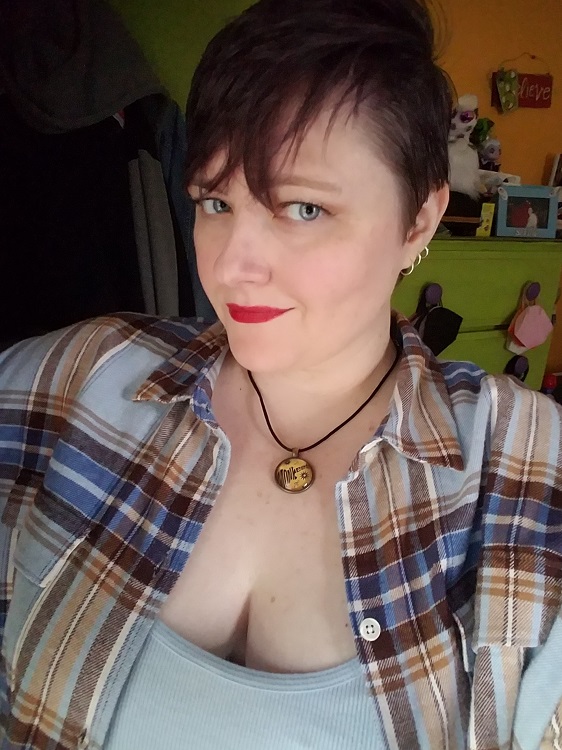
I admit that part of that is because I look good for my age.

In a youth-obsessed culture like ours, holding on to every shred of youngness is encouraged, in particular for women or femme-presenting folks. People start getting Botox in their twenties just to fend off the thought of a line or wrinkle. Skin treatments, facials, retinols, creams, special diets, plastic surgeries -all in the name of forever looking twenty-five.

I, personally, don’t want to look twenty-five. I don’t think I’ve ever looked twenty-five, even when I was twenty-five. When I was young, I always looked older than my age. Part of the reason I was cast as Mother Goose in my theater class’s final was because I was the only 18 year old who looked like she’d already had eight kids. The benefit to always looking older than you are is that your age eventually catches up to your face and then your face stays the same as the years continue to accumulate.

I call it Robert Stack Syndrome. The man looked the same age for 50 years. He is proof that this can be a blessing.

In my own version of this syndrome, I looked 42 forever and then I hit 42 and now I’m past 42 and people can’t believe I’m older than 42. I credit my genes for this. They provided me some insulation from being an 80s baby and also smoking for ten years. My grandma says my skin looks so good because I always drank a lot of water, even when I was a kid.

I also developed a decent skin care routine at some point in my early thirties that I think has done wonders. No, I’m not immune to that particular vanity, but I also think it’s important to take care of your skin. After all, it’s an organ covering your entire body. You should be good to it. A good cleanser, a moisturizer, and sunscreen, and you’re good to go.

Of course, my skincare regime isn’t that simple anymore. I’ve added an eye cream and a retinol and some sort of acid serum instead of exfoliating and a daily lip mask and a weekly sheet mask and dermaplaning. Okay, it sounds like a lot, but you’ll just have to trust me that I don’t have a lot of money or time invested in this routine. For me, I consider it all acts of self-care to keep my skin looking good.

Notice I said good, not young.

I want to continue to look good for my age. And I think that I do. No one’s going to card me buying tequila (just question my life choices), but even with the sparkles of silver streaking my hair, nobody’s going to be offering me up a senior discount either (I’d take it if they did, though).

However, I’ve recently been challenged with what looking good for my age means. I’ve started to develop the saggy, crepe skin underneath my chin and along my neck. You know what I’m talking about. That delicate wattle that some folks get. That I’m apparently getting.

And I’m not sure I’m okay with that.

Considering I’ve been researching ways to minimize or eliminate this development, I’d say that I’m not really that okay with it. I can handle the lines and I’ve learned to cope with a couple of the dark spots, but this? This is an old age marker I’m not ready for.

Between trying new neck tightening techniques and looking into creams that might help, I’d say that my willingness to age gracefully has its limits.

Probably because I’m actually not that graceful.

Poem–Magnificent Seven–“Jack Horne”

“So, we’re talking about the same Jack Horne. The Jack Horne. The legend Jack Horne.”

Jack Horne is probably my favorite of the Seven. He is the reason why I watched the movie in the first place. My dad had seen the movie and found a clip on YouTube of the so-far-assembled Seven meeting Jack Horne for the first time. It makes an impression. After watching that scene a couple dozen times, I finally watched the movie. And an odd fixation was born.

Jack Horne is the tracker of the group, a man who’s lived on his own in the wilderness for a considerable amount of time, building himself a legendary reputation for his killing of Native Americans (it’s noted in the film and in history that the US government used to have a bounty on Native Americans). This makes things a little awkward with Red Harvest at first, and Jack Horne’s final confrontation with Denali even more impactful.

It’s insinuated in the film that his murderous inclinations and isolated existence were a result of his family being killed by Native Americans.

It also caused him to find God. Or maybe he already knew God, but out in the wilderness on his own, God became his bestie. He’s very devout in his faith, even as he’s clubbing and stabbing men to death. His isolation might have caused him to become a little off-kilter, too.

I knew that Jack Horne’s poem was going to invoke his faith and his past. It turned out to be the only poem of the Seven that I wrote in the first person, but it made sense. After all, it’s a prayer. And once again, I snatched a line or two from the film for the poem. They stuck in my head. I couldn’t just not use them.

The form I picked for Jack Horne’s poem is echo verse. The only rule is to repeat the last syllable or syllables of each line, and it can be repeated either on the same line or on its own line directly beneath each line. I chose to stick to the same line. It just seemed to fit better.

After all, what’s a prayer but an earnest request?

Jack Horne

Give me clear vision, Lord. Lord,
give me clear sight. Sight
to see through this sadness. Sadness
turned vengeance, vengeance
turned sadness. Lord, let me -me,
with my bitter past- bring peace. Peace
through violence. Let me fight, fight
in good company, and then, then
Lord, see me safely home. Home.

The Importance of Being Mindful (If You Don’t Want to Fuck Up Your Haircut)

I started cutting my own hair a couple of years ago. It took a few cuts for me to get into a comfortable groove. I use clippers on the back and the sides every other week and I take scissors to the top every month. I’ve got three different guards that I use when I’m shaving my head. I use a 1 inch guard for most of it, a 7/8 inch for the nape (otherwise it grows too fast and I got a mullet situation on my hands, and I am not currently of the mullet vibe), and a 1/16 inch to clean up my neck. I start with the 7/8 inch, go to the 1 inch, go back to the 7/8 inch to clean up the transition, and finish with the 1/16 inch. A little scissor action around the ears and I’m done.

I know. You’re asking yourself, “What the hell does all this have to do with mindfulness?” We’re getting there. Be patient.

My point is that I’ve pretty much got it down to a science now. I’ve done it enough times that I know the rhythm by heart.

So, the last time I cut my hair, I clipped on the 7/8 inch guard first thing…and promptly shaved up the side of my head. Oops.

The reason I did this? I wasn’t being mindful. (See? I tied it all together.)

For me, mindfulness is being present in the moment. I have a terrible habit of putting myself on autopilot because my brain decides to concern itself with the future. My body is running on routine while I’m thinking about all of the things I need to do that day, that week, that month. This leads to unfortunate incidents.

Lack of mindfulness is what leads me to take the usual route to work rather than swinging by the post office first like I wanted to.

Lack of mindfulness is why I forget to wash the conditioner out of my hair.

Lack of mindfulness is why I screw up my yoga routine.

Lack of mindfulness is why I forget to put my earrings in (and I am naked without my earrings, thank you).

Lack of mindfulness is why I shave my head with the wrong length guard on the clippers.

When I catch myself slipping like this, my mind focused more on the future than the present, I ask myself where I am. The answer, of course, is that I’m here. In this moment. And that’s where I need my focus to be. I will go so far as to narrate what I’m doing to put myself in the present. Is that weird? Well, I’m weird. Some days, I need that extra step because my brain is stuck on time travel.

I’m not saying that I can’t think about my to do list for the day or the week or the month. I will think about it multiple times a day just to keep myself on track. But I can’t multitask being present and thinking about the future at the same time. It’s one or the other and I need to spend more time on the former than the latter.

For the record, I didn’t ruin my hair. There’s only an 1/8 of an inch difference between what I accidentally did and what I normally do, so it’s just a little bit shorter. I was lucky this time.

It could have been down to the skin.

Poem–Magnificent Seven–“Red Harvest”

It’s time for your monthly dose of poetry that resulted from a hyper focus.

Like Vasquez, I had Red Harvest’s poetry form chosen before I had a good idea of what I was going to write, though I did have a good nugget of inspiration to work with. Red Harvest had been told that he was meant to walk a different path away from his tribe and that intrigued me. It was portrayed as being an unusual life choice as when Red Harvest first shows up, the rest of the Seven and as well as Emma Cullen and Teddy Q immediately start looking for other members of Red Harvest’s tribe. As it turned out, Red Harvest found a new tribe, even if it was temporary.

Though most of the Seven accept Red Harvest easily, there is some lingering tension with Jack Horne, who made his name as a killer of Native Americans. That tension seems mostly one-sided, though, and fades quick enough.

A man of few words, Red Harvest speaks mostly in his native tongue, which only Chisholm can understand, but he does speak -and presumably understand- some English. Mostly, though, he cuts a figure as a silent, stoic warrior, skilled with a bow as well as a gun and a knife. He paints his face as well as the face of his horse, but not always, marking himself when battle is expected. There is a quiet certainty about him. This is his path and he will walk it.

I chose a nonet for his poem. It’s a diminishing poem. The first line has nine syllables (hence the name nonet), the second line has eight, third line seven, and so on, the last line ending the poem with a single syllable. I felt it a fitting form for a character who was sent out on his own to find his place knowing it might be temporary.

Behold my mastery of disappearing syllables.

Red Harvest

Alone, his path a prairie, shaded
with hidden purpose. Guided by
winds he knows by soul, leading
him to his only fate.
Tying him to lives
he cannot save
for a place
not his
home.

I Didn’t Grow Out of Being Weird

I was a weird kid.

Hardly a revolutionary statement since most kids are weird. They arrive into the world with no context for anything going on and they tend to make shit up as they go along until they’re either educated or ridiculed into some kind of normal. The teenage years definitely inflict a certain conformity, otherwise they will be the most miserable years of existence until the escape into adulthood. Anything outside the strict rules of the adolescent society is game for all sorts of bullying.

I was a weird kid that had an imagination too big for my britches, who indulged in being weird because it made people laugh or skitter away, who found a way to stay weird throughout my adolescent years without too much damage. I’d do things like tell myself stories out loud while I played Tetris. I’d spend a whole day talking in an accent just because (my mother hated it). I’d play with bees, catching them and letting them go until I finally got stung. And then I went to the park to ride my bike with a swollen hand because it turned out that I was allergic.

As a teen my outward weirdness was confined to my interests, which were way out of fashion from everyone else’s. My uncoolness masked much of my weirdness, and my reputation as someone not to cross protected me from any serious harassment.

I went into my legally adult years still weird and indulged in it -dying my hair various colors long before it was accepted and wearing elaborate, brightly colored make-up and rocking pro-wrestling t-shirts over prom dresses. My weirdness retreated from the public eye once again by my mid-twenties, again only coming out in my interests. Even adults are allowed their weirdo interests without much question. But at home, alone or with my closest friends and family, I was weird.

And now I’m middle aged and still weird.

I have yet to mature out of my weirdness. Probably because I have yet to mature to an acceptable degree.

I still tell myself stories out loud.

I still talk to myself in various accents.

I still make up songs on the spot that narrates what I’m doing (my “Scoopin’ the Poops” song while cleaning the litter boxes is an absolute banger).

I still make up songs for my cats (they hate this).

I still have an imagination too big for my britches.

There are times when I think I might be too weird to be loved. I’ll catch myself calling squirrels to the backyard to feed them peanuts and I’ll be talking to them in a funny voice and I’ll realize I’m still in my pajamas and my house shoes and I’ll think, this is probably why it’s best that I’m single. It’s a lot to ask someone to put up with that. I’m lucky I have friends.

I don’t mind being weird. I know it’s off-putting to a lot of people, but I enjoy it. It’s natural. It’s authentic. I don’t have the energy to restrain it anymore, not at my advanced age. I’m afraid everyone is going to have to learn to live with it. I’m already amassing a squirrel army. It’s only going to get worse.

Good luck.