Favorite Cover Songs

I’ve probably already done a post like this in the past, but like the 20 Tracks post I did, this one was also inspired by a thread on social media. It came across my Blue Sky timeline asking for your favorite cover song. Some people were putting a lot of stipulations on determining their choices, but not me. I looked at the prompt and said, “I can’t pick just one” and it became a blog post.

Because I have so many that I want to mention, I’m grouping them into categories of sorts. I’m also lazy and not linking them to anything. You’re grown. You know how to internet. Work that search engine, baby.

One of the qualifiers someone mentioned in their favorite cover song determination was that it should be more successful than the original. Allow me to introduce you to The Monkees. “(I’m Not You) Steppin’ Stone” was first done by Paul Revere and the Raiders, but became a huge hit for The Monkees (twenty years later, The Monkees covered another song by Paul Revere and the Raiders, “Kicks”, for their twentieth anniversary album). Another one of their hits, “Mary, Mary”, was written by Michael Nesmith and was recorded by the Paul Butterfield Blues Band before The Monkees became a thing. Run DMC put their own twist on the song years later.

Speaking of The Monkees, Run DMC isn’t the only one who’s covered their songs. Everyone knows Smashmouth’s version of “I’m a Believer” thanks to the movie Shrek, but my preferred version is by the indie band Echo Orbiter. Another indie band, Bikeride, did my favorite cover of another Monkees song, “(Look Out) Here Comes Tomorrow”. In case you’re curious, they’re both on a compilation album called Through the Looking Glass: Indie Pop Plays the Monkees.

Let’s keep talking about The Monkees for just a minute, specifically, Micky Dolenz. He’s done quite a few covers during his solo career (including an album entirely of Nez’s songs), but two of my favorites that he’s done are “Crying in the Rain”, with his sister Coco Dolenz, and “Good Morning, Good Morning”, which was originally done by The Beatles (a snippet of their version was used with permission in the final episode of The Monkees). I kind of like Micky’s version better than the original. Don’t tell Paul or Ringo.

Let’s move on to The Beatles, shall we? Two of my other favorite covers of their classic songs: Aimee Mann’s version of “Lucy in the Sky with Diamonds” and Oingo Boingo’s version of “I Am the Walrus”. Goo goo g’ joob.

Another one of my favorite Beatles covers is Eddie Vedder’s version of “You’ve Got to Hide Your Love Away”, but then Eddie Vedder might be one of my favorite cover artists. Back in the day, I bought a Pearl Jam CD single (oh wow, remember those?) featuring covers of “Last Kiss” and “Soldier of Love”. I bought it for the “A” side, but I ended up loving the “B” side more.

One cover song cliche is slowing down a song. The technique is usually found in movie trailers. However, it’s not necessarily a bad thing. Three of my favorite slow downs are “Toxic” by The Chapin Sisters, “Light My Fire” by Julie London, and “Do You Wanna Dance” by The Mamas and the Papas.

My lack of distaste for slow downs is probably because my favorite kind of cover song is the one that switches genres.

My all-time favorite cover song is “Super Freak” by Bruce Hornsby, Ricky Skaggs, and John Anderson, who took the Rick James classic and gave it a country/bluegrass twist. It shouldn’t work, but it does. The Gourds did a similar makeover with Snoop Dogg’s “Gin and Juice”, which I also love.

Instead of slowing down, how about going harder? I have a sincere fondness for the hard rock/metal versions of “Barbie Girl” by MxPx and “La Bamba” by either Rancid or Overbass. I’m not sure which one as I acquired this particular tune during the questionable downloading days when not everything was accurately labeled and even the internet isn’t sure who did it. Also, Alien Ant Farm’s cover of “Smooth Criminal” deserves a mention. They took an already bad ass song and made it more bad ass.

If I need to go punk, I’ll go for Me First and the Gimme Gimmes, especially “Science Fiction/Double Feature” and “Different Drum” (another Nez penned song, this one made famous by Linda Ronstadt and Stone Poneys).

And if I really want to go wild, then I’m all about the pop jazz versions of “Wonderwall” by The Mike Flower Pops and “Smells Like Teen Spirit” by Paul Anka. Yes, you read that right. That Paul Anka. And, yes, it shouldn’t work, but it does.

Think I’m wrong? Keep it to yourself. Think I’m missing some good covers? Let me know.

Ruminations on the Accusation of Superficial Stylistic Choices in Storytelling

At the library I work at we offer two book discussion groups: general fiction/non-fiction led by the director, and sci-fi/fantasy led by the circulation supervisor. The other day I overheard a conversation between the circulation supervisor (who is my direct supervisor, so therefore, I am his biggest pain in the ass) and a member of his book discussion group. I guess the book they’re currently reading shifts back and forth between timelines. My supervisor complained that he didn’t like this timeline shifting. He felt the story could have been told linearly. He said the author just did it for show.
This statement caused a record scratch in my brain.

To put it plainly, I was offended by the dismissive tone of his opinion. I wasn’t particularly fond of the other person’s follow-up that everyone is writing dual timelines now, like it’s a trend. And maybe it is. What do I know? I don’t typically read much fiction with this type of storytelling style.

What I do know is that writing multiple timelines and shifting between them is fucking difficult.

One of my WIPs, What Happened to the Man in the Cabin?, is written with multiple timelines that the story shifts between. Once I stopped biting my tongue, I looked inward and asked myself if part of the reason my hackles raised was because I perceived this as a slight on my own work. And while, yeah, maybe a little of my instant rage was a gut reaction to a glancing ego blow, I think more of it had to do with dismissive attitude toward the craft as a whole.

Full disclaimer: I am not speaking on behalf of every writer. I can’t do that. I can barely speak for myself. I don’t know how every writer acquires, cultivates, and translates their ideas to paper. Speaking for myself, though, I can tell you how I do it and one thing I will screech from the top of my lungs is I don’t do things for show.

What Happened to the Man in the Cabin? is written in multiple timelines that are shifted between because that’s the story. That’s how the story is coming out of my brain. That’s how the story wants to be told. Maybe other authors have a little more say in their structural decisions, but I’ve found that a story is what it is and if I try to change what it is, then it does not is.

Sure, I could pull apart my story and tell it in a linear fashion to suit my supervisor’s taste, and you know what? He probably wouldn’t finish it because he’d find it boring. It would be a very okay story in which a terrible thing happens in this town and that terrible thing greatly impacts the lives of these people thirty years later. The end.

Or I could tell the story the way it’s meant to be told, which creates a whole lot more tension and much more impact when revelations are made. Maybe I’m biased, but I think this version would be a lot more interesting to read. It’s definitely been more interesting to write.

Which is another thing. I have no idea how other people write multiple timelines, but in my case, I had a basic outline of what happened in the past and what was going on in the now (and the near now in one timeline), and I just started writing. I didn’t write each timeline separately. I shifted between them as I wrote. I let my story tell me when to switch the timelines. Is that the best approach for this? I have no idea. This is the first time I’ve done it and I haven’t finished yet.

I haven’t read the book my supervisor was complaining about (for the record it’s The Book Eaters by Sunyi Dean, which I had to go look up because I couldn’t remember what the pick was, which is really kind of bad because I’m the one that makes the fliers for the book discussions, but anyway), so I can’t say whether or not he’s right and that the book would have been better off written linearly. I have no idea whether or not the author chose this story structure “for show” (I bet not). But I’m willing to go out on a limb in my belief that the choices she made -whether anyone agrees with them or not- were in the best interest of the story.

After all, the story is the boss.

Schrodinger’s Fatphobe: Fashion Edition

“I’m all for body positivity, but…”

“I think people should wear what they want, but…”

I’ve heard or read these sorts of statements frequently, particularly in the warmer months of the year (gee, I wonder why), and let me tell you, the “but” is where folks show their ass. That “but” is guaranteed to be followed by some hateful, judgy shit that stinks up the entire statement. This Grade F manure isn’t restricted to just fat women, or fat folks. That “but” can be applied to folks of a certain age, gender presentation, sexuality, or color, too. But for the purpose of this post, I’m going to focus on my fat femme presenters because I am a fat femme presenter.

Folks really tend to feel some kind of way about the fashion of fat women. They’ve got a real hang-up when it comes to the way they adorn themselves. They’re all about body positivity, you know, think everyone should wear what they want, but if you’re fat, well, you shouldn’t wear that.

In my experience, “that” can be shorts, crop tops, tank tops, two-piece bathing suits, skirts, dresses that show any leg, arm, or cleavage, sandals, spandex, lycra, anything deemed too tight, anything that shows rolls, anything that shows too much skin.

Because they’re body positive and they believe everyone should wear what they want, but they don’t want to see you wear what you want. Could you please be comfortable and stylish and fat elsewhere? Thanks.

They say it with such authority, too! Like because my cellulite offends their delicate sensibilities, I shouldn’t wear shorts. Well, Sandra, it’s 90 degrees and the humidity has it feeling like 100. I’m afraid you’re going to have to endure my bat wings and fat rolls along with the heat wave.

“If you weigh over X amount, you shouldn’t wear…”

First of all, no two people wear their weight alike. 220 pounds on me looks a lot different than it does on my sister. (No, I don’t currently weigh 220 pounds and I have no idea what my sister weighs. I just remember that at one point in time, the two of us both weighed about 220 and no one would have guessed we weighed the same because of how we carried the weight.) Second of all, there aren’t weight limits on clothes. Nowhere on the tag does it say that I can’t wear yoga pants or a crop top because I exceed the maximum weight limit. The clothes are in my size, I’m going to wear them. That’s how clothing works.

And before someone trips over themselves to point out the people who wear clothes they think are too small, well, that’s the size they want to wear. I suggest you make peace with that for the sake of your blood pressure.

I’m not saying that I don’t judge people’s fashion choices. I admit to being a judgy person. I think I could place respectably in the Judgmental Olympics. However, I’m less likely to be too het up on judging the superficial. I may see somebody wearing something that I find questionable, and I may think to myself, “That is certainly a choice”, and I may question the motives behind the style choice, but as long as they’re comfortable, happy, and feeling good, rock on then. I don’t feel the need to blast my judgy opinion about some stranger’s garb on social media. I definitely don’t feel the need to say it to their face. Remember what I said about other people’s opinions not being my problem? Same goes for me. My opinions are not other people’s problem, either.

Now, if I know the person, if we’re friends or family, if I love them and we have the kind of relationship that allows me to voice my opinions, I may say, “Are you good with your cheeks hanging out of your shorts like that? It seems like an invitation to an awkward sunburn.” And if they’re like, “Yeah, I feel good. I look good. I want to wear these shorts,” then, baby, I will put the sunblock on their booty dimples myself. Because I am body positive. I’m positive you can dress your body the way you want (within legal limits, of course; the only cops we want involved in fashion belong to the Village People), even if it’s not what I would choose, and especially if it’s not what society would have you do.

No buts about it.

Read This If–You Like Bad Girls

There’s something about women behaving badly -or perceived to be behaving badly- that captures the attention. They definitely make for good reading. The trouble is that history largely ignores these women, deeming them too “bad” in some way or another to remember. It does us all a disservice in the long run in order to continue to serve the stories of men. And most of the time, those stories aren’t half as fun!

These were two books that I processed at the library and then immediately checked out as soon as I had finished, the lure of bad girls too strong to resist.

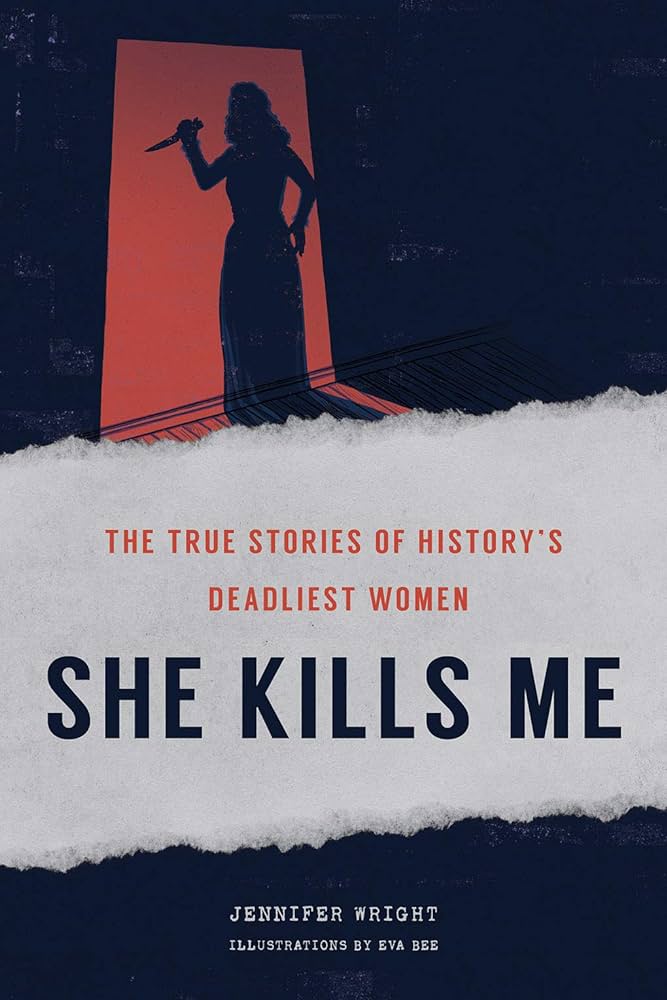
She Kills Me: The True Stories of History’s Deadliest Women by Jennifer Wright- Covering forty women, the book explains how they killed for a variety of reasons, including revenge, fear, necessity, and pleasure. Grouped by motives and/or means, there are poisoners, avenging angels, husband killers, family killers, mercenaries, women scorned, and women who would have made the grade on the ol’ psychopath test. Something for everyone, really.

We love a woman excelling in a man’s field, don’t we? And murder has always been thought of as men’s work. However, this book showcases some women who could have given a whole lot of men a run for their money. And did, in some cases. I like how the book presents the women and that it includes women who killed for a cause, particularly the cause of murdering Nazis. Because if women should be condemned for the murders they commit just like the men, then they should be lauded for their justifiable killings just like the men, too.

Unbecoming a Lady: The Forgotten Sluts and Shrews Who Shaped America by Therese O’Neill- It’s no secret that women tend to get left out of the history books. This book works to put 18 of them back in, so to speak. These are the women you wanted to learn about in history class because they were so ballsy that some of the milquetoast white guys you had to learn about would clutch their pearls in the presence of these women. In fact, some of them did because one of the women -Dr. Mary Edwards Walker- wore pants in public.
I love how the book gives the women their due. For example, Lillian Gilbreth is best known as the mom from Cheaper by the Dozen, but without her work, the kitchen would still be a labor intensive space and we’d still be hiding our pads. Pants-wearer Dr. Mary Edwards Walker is the only woman to be awarded the Congressional Medal of Honor. “Poker” Alice Stubbs conquered the Wild West one poker table at a time. And that’s just three of them! The book is filled with colorful, bad ass women, and I so enjoyed learning of their existence.

Not all of these women are bad, but they all qualify as varying degrees of bad ass. If you read these books, I hope you find the bad girl of your dreams. If not, just ignore them like history has.

I’m Queer (Even If I Don’t Always Feel Like I Am)

I don’t remember what I was going to write when I first conceived of this blog post idea (I probably should have made some notes because, no self, you’re not going to remember it later), so let’s just write a bunch of queer thoughts, shall we?

I’ve been out as a bisexual since I was 17. I’ve gotten more confident in my sexuality in the ensuing years, but I still question myself. I’ve been single a long time and I have even less relationship experience with women than I do with men. Sometimes I ask myself, “Do I really like girls?” And then I’ll see a beautiful woman and once I stop thinking very unclean thoughts, I say, “Yeah, no, I definitely like girls.”

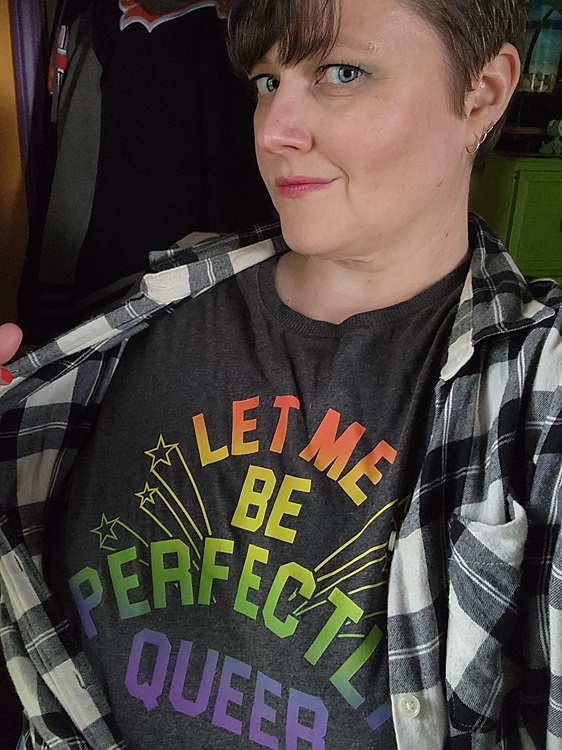
I’ve got Pride flags (progress and bi), Pride rings (rainbow and bi), an obnoxious Pride shirt that says “Let Me Be Perfectly Queer”, and yet, I’ve never been to a Pride event. Never been to a parade. Never even been to a gay bar. I would love to experience all of those things. I don’t have a bucket list, but it’s safe to say they’re all on my Long-Term To Do List.

I think there are several reasons why I haven’t engaged more with the queer community in the physical, aside from the fact that I’m introvertedly inclined and therefore require more energy to participate in social situations. I think part of it is my bisexual insecurity of not being queer enough to be in those spaces. I think the other part is not having very many queer associates in my meat space. I don’t exactly have folks around that I go can go to these things with, which would make that easier for me. Yes, dears, it’s always about my comfort.

Being out and not having very many queer associates in the immediate vicinity means that I’m often the token queer in my friends groups, at certain family events, and at work. I am often the queer education center of those people, answering their questions and trying to provide them with accurate info. I’m also the one who feels responsible to correct them even when they don’t ask for it. I will correct folks on someone’s pronouns and I will call folks out for their homophobic jokes and I will explain in excruciating detail everything I know about trans folks. Why? Because apparently some knowledge needs to administered against people’s will. Learn it or continue to have me ruin the vibe by being a buzzkilling well-actually.

Do I always want to be the queer answer-person in these situations? No. Do I always want to be the queer existence enforcer? No. Sometimes I’m tired and I don’t feel like being the only bisexual you know. But I’m the only bisexual you know, so I have a duty to uphold.

And what’s really wild is that I don’t always feel queer enough to be that person. That I haven’t had enough of the first-hand queer experience to be that guy.

I have been very fortunate to find a queer community online, starting back in the long, long ago of the early days of the internets when we were all communicating on message boards and AIM and LiveJournal. I’ve had the privilege of witnessing the journeys of many groovy people as they evolved through labels until finding the ones that fit. I’ve gotten to witness the expansion of the queer community -as well as the bullshit gatekeeping within it. I’ve gotten to fully immerse myself in an online queer experience to such an extent that I forget -for a second- that not everyone is queer. That being part of the rainbow isn’t the default. I guess this is how straight, cis people feel moving through the world.

I suppose I wrote all of this to say I’m here, I’m queer, I will be gay and do crimes, I will let my freak flag fly, and I’m bi and I exist. Even when I don’t always feel like it.

Happy Pride.

Those Five Years Made a Difference, I Guess

I’ve been working on next year’s audio project for my Patreon ($3 a month will let you listen!) and I’ve once again decided to do audio recordings of one of my self-published collections. Take a Bite is my last self-publishing venture to date, published about five years ago and just about five years after I published Yearly. I thought it was fitting to follow the audio version of my first self-published short story collection with my last.

While I stand by my good idea because recording twenty-five flash fiction stories has been easy peasy puddin’ ‘n’ pie, I was not prepared to be so struck by the difference in quality between Yearly and Take a Bite. And, friends, I am struck.

Here’s the thing. I’m not someone who typically goes back and reads my old work. Once it’s published, it’s no longer any of my business. It’s not that I don’t like the stories I wrote; it’s just that I’m done with them. Unless I have to revisit them for some reason -like recording audio versions- I let those sleeping dogs lie. So, while I may remember the plots of the stories, I don’t remember exactly what I wrote.

It had probably been a good few years since I last read Yearly before I recorded it. Reading it out loud really highlighted the flaws of those stories. Not just the typos (my laws I caught so many typos I feel like I should offer people a refund), but all the ways the stories could have been improved, everything I would have done differently had I written the stories now. I’m not saying the stories in Yearly are bad; they’re pretty okay, enjoyable reads if I do say so myself (ignore the typos). But I’ve learned a thing or two, developed my craft a little bit since I wrote those stories.

Recording Take a Bite really illuminated my progress. Allowing for the fact that I was writing flash fiction -each story was limited to 1,000 words- the stories are just a little bit better. The sentence structure, the word choice, the descriptions are of much better quality than the stories in Yearly. The improvement is apparent. Visible. Obvious, even. My craft got craftier, as it were.

There’s also fewer typos, which means my editing skills improved right along with my writing, and I think I’m a little more blessed for that.

I think sometimes it’s easy to miss certain kinds of improvement because it is so gradual and takes place over a longer period of time. Even within Yearly, I could see which stories I wrote earlier in my writing career (as much as you can call it that) and which ones I wrote later just within that collection. I can see the same sort of progress happening within Take a Bite even though those stories were written in a shorter period of time. It’s not quite as obvious, but I can still see what I did there.

I think this kind of improvement is also sneaky because I’m not consciously trying to improve. My focus is always trying to write the best story I can and to edit it to be the best story I can and as a result of my dedication to do my best -learning from my mistakes, trying new things, giving myself the time, space, and patience to grow and experiment- I get better as a writer.

It’s the sneakiest of win-wins.

I’m Not a Morning Person, But I Am Waking Up Better

There are three kinds of people: morning people, night owls, and people who can do either. I happen to be a secret fourth kind of person who doesn’t like waking up period. It doesn’t matter when. Waking up pisses me off and I’m mad that I’m conscious.

There was a time in my life when I had the energy of youth that sort of overrode that anger. I don’t have time to be angry about being awake because I have shit to do. I no longer possess that kind of energy. I’ve got a middle-aged battery now.

I’ve also developed some bad habits that have drained that battery, maybe even damaged it.

Leaving aside the health issues I’ve dealt with for the last five or six or seven years that I know have made their negative impact, my morning and nighttime routines have probably done more damage, particularly my morning routine.

Back in the long, long ago of my youth, when I got up in the morning, I laid in bed for a bit, watched a little TV, and then got up. Unless I had to go to work. Then I just dragged my ass out of bed and got on with it. I might have been tired, but I found the energy to do it. There was a period of time when I was exercising in the morning for 20 to 30 minutes five days a week and did so with almost no issue at all. I was never too tired to workout. I just did it.

In the past several smart phone years, my morning routine morphed into me waking up, rolling over, putting on my glasses, and immediately picking up my phone to start my day of going through emails and scrolling through social media. Given the growing dumpster fire that is our current reality situation, I suppose it really should be no surprise that I don’t want to get out of bed. Exercising five days a week, even for ten or fifteen minutes, became an impossible task. I cut it down to three days to up the odds that the workouts would get done at all. And if I did have the energy (which was rare), many times I’d be in bed so long scrolling to catch up on my timelines that by the time I was finished, I really didn’t have time to exercise anyway.

It came to a point that one morning I was scrolling through Twitter, telling myself to stop and get out of bed, but I just couldn’t make myself. I was miserable, but I couldn’t stop until I was finished.

Doesn’t take an advanced degree to tell me that isn’t healthy.

In my desperation to fix this bad habit and improve my morning routine in the hopes I might feel better, I didn’t really give my remedy too much thought. I wouldn’t pick up my phone first thing. I’d read or journal. When I did pick up my phone, it was only to go through my email and maybe Instagram. No Twitter or BlueSky until after breakfast. Let’s how it goes.

Let’s see if I could do it.

I was sure I’d cave and check BlueSky at least, or maybe put off starting the change “one more day”.

To my surprise, I just did it. I woke up on a Monday morning, rolled over, put on my glasses, and picked up my Kindle instead of my phone. I read a couple chapters of my book before I checked my email and scrolled through Instagram. That was it. I didn’t even think about checking BlueSky or Twitter.

Not as surprising was how much easier it was to start my day, how much more energy I had, how much easier it was for me to put on my sports bra and exercise, how much easier my entire day was by putting off the deluge of worldly information.

How much easier it was to deal with that deluge of worldly information after an improved morning routine.

In the first week or so after I started my new morning routine, I caught myself a few times reaching for my phone first thing, but caught myself before I could fall into my old pattern, putting down the phone as soon as I realized the autopilot was engaged. Those were valuable saves, I think. Otherwise, I might have given in and given up.

It’s amazing how much difference a little change can make. I wonder if I can fix my whole life this way.

Better start with my bedtime routine first.

Read This If–You’re Into Queer Discovery

It’s Pride Month, so it makes sens that I would pick a couple of queer titles to recommend. After all, we’re celebrating here. And what better way to celebrate than with a couple of books featuring people realizing that they’re queer. Not all of us know from a young age that we’re part of the Rainbow Mafia. Thanks to the constant bombardment of the heterosexual agenda, many people just assume they’re straight and it’s not until they’re older -even middle aged and beyond- that it occurs to them that they might not be.

As it turns out, one of my favorite ways to read about other people discovering their queer identity is when the fall in love. It’s a romance trope I never knew I needed, but I do. Maybe you do, too.

Second Chances in New Port Stephen by T.J. Alexander- Eli Ward is returning to his hometown of New Port Stephen, Florida, a very different person than when he left. Post-transition and sober, Eli finds himself moving in with his parents just in time for the Christmas holidays after the star of the TV show he was writing for decided to embroil himself in a scandal and put Eli out of work, something his parents don’t know. Running into his high school ex Nick Wu is the last thing Eli expects or wants, but the dedicated divorced dad with a busy life sparks a rekindling that could go beyond friends.
What I love about this book (aside from the fact that New Port Stephen is exactly what you think of when you think of a weird Florida town) is that our mains used to be an item before Eli transitioned. As someone who grew up with a person who transitioned after high school, I like seeing that acknowledged in fiction. Nick’s feelings about Eli being the same person he knew in high school even though his appearance has changed and he’s lived some life hit me where I live. We’re also treated to Nick’s queer journey when he finds himself falling for Eli. Not to spoil it, but we get some underrepresented queer rep in this one, which I very much appreciate.

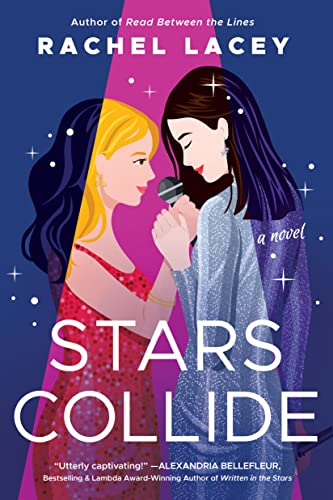
Stars Collide by Rachel Lacey- Eden Sands has been a pop star for twenty years, but after the break-up of her marriage, the flop of her last album, and a tour unsold out, she’s finding her star status dimming. She needs a boost, but balks at the possibility of doing a duet with up and coming pop star Anna Moss at the Grammy’s. Anna is desperate to be taken seriously and dueting with her idol Eden Sands could do that for her. When the two of them finally come together, it turns out that they’re better suited for each other than they thought.

My director at the library actually put this one on hold for me as soon as she catalogued it because she knew I’d love it. What’s great about the book is that Anna is an out and proud pansexual, another underrepresented queer identity in the realms of fiction (at least in my opinion). She also has the past of a toxic relationship that probably happens far too often to young people experiencing stardom. Eden on the other hand has always assumed she’s straight, so falling for Anna is a wake-up call. The reason that love with her husband felt so lackluster wasn’t because love itself was overhyped, but that she wasn’t with the gender who lit her up. Ah, the insidious het agenda brainwashing at work. Even if Eden and Anna were purely platonic, watching Anna help Eden navigate these unexplored waters was lovely to read.

If you read these books, I hope you discover some queer joy. And if you don’t, keep searching. The gay is out there.

Sorry, That’s Not My Problem–Other People’s Opinions Edition

Let’s talk about other people’s opinions.
Everybody has an opinion on something. The kids today, what that lady is wearing, the blathering of an ex-reality star, that guy’s hair, that other guy’s podcast, the casting choices in period shows on streaming services, the state of the neighbor’s yard, the money the other neighbor spent on a new truck, what that celebrity wore to that premier, and that royal marriage. Petty ass opinions on petty ass shit.

These opinions are not my problem.

They are not my problem because they are about nouns that do not affect me. Most of the time, they are about nouns that I don’t even have my own opinion on, or if I do have an opinion, it’s not worth the effort to share it because I care about that noun so little.

This could be a byproduct of working in customer service. Working with the public, you find yourself subjected to many unsolicited opinions on a wide variety of subjects. Not only are these opinions unsolicited, they’re frequently unrelated to the customer service task at hand. There you are, minding your business, helping a customer/patron, and the next thing you know they’re telling you all of their thoughts and feelings about Prince Harry. With all due respect Sir/Madam/As The Case Maybe, that you take umbridge with his royal behavior is not my problem. I have no idea why you’d think it would be or why you’re even telling me this. This hourly wage will only get you so much. And no worries, I will not get you started on his wife.

But I find myself this callous in my personal life as well. While I enjoy having conversations with friends and family and acquaintances, I’ve found that there are times that their opinions are not my problem. You think that woman is too old to be wearing that? I think that I don’t have the energy to concern myself with something that doesn’t affect me. Where do you get your vim and verve? Let’s talk about that instead. Maybe I’m no longer in the mood to rip strangers apart for insignificant, superficial things that do not impact my existence in the least. Maybe I’d rather roast the local politician’s insistence that libraries are indoctrinating children instead. Seems more productive.

In my advancing age, this has begun to encompass other people’s opinions about myself as well. I’ve always said you shouldn’t care what other people think, but I’d be a liar to say that I haven’t spent most of my existence vacillating between not caring and caring too much. But more often, I find those opinions that other folks might have of me falling into the “not my problem” category. Don’t like what I’m wearing? Avert your eyes. Don’t like how I live my life? Bankroll it and I’ll consider your feelings. Maybe.

I realize that this comes across as somewhat inconsiderate and misanthropic, but I’m not saying that I’m disregarding anyone’s opinions. I’m not saying that they’re wrong.

They’re not just my problem.

Maybe a Septet Will Help

I’ve been struggling with a poem lately. I keep adding lines, tweaking words, messing with metaphors. It’s not working and all of the tinkering I’ve been doing hasn’t helped elicit a breakthrough. My ah-ha moment remains elusive.

The funny part about this brick wall I’m banging my head against is that this poem is just for me. I have no current intention to publish it anywhere or submit it to a contest. It’s just something that has seized my brain and it brings me joy to work on it. Yes, even as I struggle, I’m enjoying the challenge of it. I’ll enjoy the finished product even more, even if my eyes are the only ones that read it.

You may be asking why I’d put so much effort into something that I have no intention (as of now) of getting published. Why would I spend so much time on something that I’m not going to cash in on?

Well, I’ll tell ya, Mert. I played that game of only working on projects for the purpose of gain. Only writing stories and poems that I could submit to contests or zines or anthologies or self-publish or put on Patreon. There is nothing wrong with wanting to get paid for my work. I like to get paid for my writing. I’d like to get paid more for my words, if I’m going to be honest.

But.

I think a big part of the creative wasteland and writer’s malaise I experienced for several years was because the end goal was purely to get paid. How can I profit off of this pile of syllables? There were a lot of other contributing factors in my life at the time, but that was a pretty large vibe killer. What helped to bring me out of that funk? Writing something that was just for me, something that seized my brain and wouldn’t let go, and the whole point of me writing it was just to write it. That’s it. No goal beyond getting it on the page.

And lo, I felt the chains I’d wrapped myself in fall away and the joy returned.

Now I’m working on three fiction projects, two of which are for myself, with no thoughts beyond just finishing them. The third is for a contest, and it’s the first short story I’ve written specifically for a contest in a long time.

In the past few months, I’ve found a real joy in writing poetry. I’ve always liked doing it (Bad Poetry April is my testament), but this new emotional high has made me want to experiment and invest in the craft of it. I default to free verse when I write poetry. There’s nothing wrong with that. It’s a very cromulent form of poetry. But I need to broaden my play palace. So, I wrote seven poems in seven different forms about seven characters from a movie I love. I had a blast doing it, too. I found a couple of new poetry forms that I enjoy working with and the courage to continue experimenting with new ones.

No one is probably going to read any of these poems, but that doesn’t mean they’re pointless or a waste. First of all, I like them and I like to reread them and I may continue to tinker with a few of them until I get them just right. That’s not time wasted. That’s craft. Craft is important. So is the creative process. Sometimes you need to get a little ridiculous -like writing poems about movie characters- as part of the process. Wonderful things can happen when you have that freedom to be silly without any pressure.

As for the poem I’m working on right now, I think the trouble is that I’m once again defaulting to free verse when what this poem might need is more structure.

Maybe a septet really will help.