Writing–Honors English

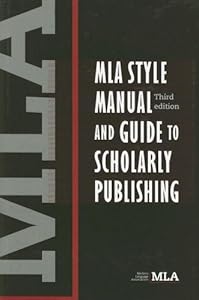
Cover of "MLA Style Manual and Guide to S...

I took three years of honors English in high school. Freshman through junior year. It was expected that if you took three years of honors English that you’d take World Lit, where honors and A English came together as one, your senior year. I did not. I didn’t care for the teacher and frankly, my brain had had enough. I took Sci-Fi and Mythology classes instead.

Best choice I made considering I ended up working forty hours a week that year and between that, the only two hard classes I did have (physics and pre-calculus), and the extra work I put into our final play for theater arts class, I wouldn’t have had the time to devote to World Lit, though I doubt it could have been harder than honors English.

I don’t believe I’ll ever take a class harder than honors English. I could take quantum physics, not understand a damn word the teacher said, and still thing it was better than my freshman year final in honors English.

I’m not joking. My teacher was a taskmaster, an absolute tyrant when it came to honors English. Everything she did was to prepare us for college, she said, and in the three times I’ve been to community college, I never had anything come close to what she put us through. The class was so hard, the teacher so demanding that we never had more than eleven kids in our class. In fact, it was the biggest class. I think by junior year, we only had eight.

Brutal.

Don’t think so?

My freshman final was to write three five paragraph themes answering questions covering three of the four books we’d read that year. We had an hour and a half to get it done. The questions involved exploring themes, symbolism, and all that good literary junk. The books we read that year were Of Mice and Men, To Kill a Mocking Bird, A Tale of Two Cities, and The Scarlet Letter.

Sophomore year we read a few Shakespeare plays, Romeo and Juliet, Julius Caesar, and Macbeth. In anticipation to the reading of two of these plays, we had to write a five paragraph theme pertaining to the play in question. In class. Fifty minutes. That’s all the time we got. One theme was on the word maturity. The other theme was on the word ambition. That’s right. We were expected to write a fully developed, edited, five paragraph theme in fifty minutes on a single word.

Good times.

Sophomore year also featured the required research paper all English classes had to write. Twenty pages on a controversial topic, presenting both sides without bias, in correct MLA format. And notecards! Fifty properly formatted research notecards had to be turned in as well. And to make sure that education stuck, we ended up doing a couple of ten page papers the same way our junior year.

We had ten vocabulary words to memorize a week for three years. The words were given to us on Monday. We had to present definitions on Tuesday. The test was on Friday.

We did independent grammar study on Mondays. That’s right. We were responsible for teaching ourselves and each other grammar (the teacher helped when needed, of course). We were then tested once a quarter. If everyone didn’t pass to her liking, we risked going back to having formal lessons.

It was like boot camp every day for three years.

And it was the best thing ever for me as a writer.

I didn’t realize it at the time when I was being put through my paces, but this hardcore teacher was doing more than prepping me for college. She gave me many of the tools I was going to need to survive a writing career. She taught me organization, attention to detail, how to revise (really gave me the best advice on that), the importance of word choice, the importance of doing it right, and how and when to settle for calling a piece done.

I hated it at the time, but I love that I went through it now.

I saw my honors English teacher in the post office the other day. I doubt she remembers me (it’s been 15 years since my last class with her), but I recognized her on site. Her beehive is still intact, though a little grayer. She still looks a bit like a bird, small and pointy. And I bet she’s still running kids through her honors English gauntlet with the same toughness she did when I was in her class.

I hope those kids eventually come to appreciate it as much as I do now.

Writing–April Projects

Tree - leaf canopy

Last month my main goal was to get down a first draft of a personal essay that I want to submit to a contest. This month my main goal is to see if I can work that first draft into something I want to spend 25 dollars on in order to submit it to a contest. I believe the early bird deadline is May 1st. So, this will be fun. No pressure as I reserve the right not to submit an essay I don’t think is good enough to go since it will cost me 25 bucks to submit and right now money ain’t growing on trees.

Other April projects include revising “Gone Missing”, the not so short story. The first draft ended up being just about fifty pages, a little over 10,000 words. I need to figure out what I’m going to do with it. It’s hard enough for me to sell a story period. Trying to sell a longer story like this one ups the level of difficulty. I’m looking into the possibility of self-publishing it, say on Smashwords so it would be available strictly for e-readers, but my self-publishing success hasn’t been the greatest. But then, my publishing success in general is questionable, so really, I think I can hack it and break even either way.

I’ve also got a novel idea that has taken hold of my brain and won’t let go. I’ve got the basic plot, a subplot, the main characters (all except the bad guy…he doesn’t have a face or a name yet, but that will come, oh yes), and an idea of what I’m doing. I’ve already started working on an outline and jotted down a few scenes so I don’t forget them. Writing this a little a day will be a nice break from revising.

My quest to get 50 rejections this year continues. To check in, as of then end of March I have 3 rejections, 1 acceptance, 9 stories still out, and 2 ready to go. Obviously, more submitting will be done.

Let’s hope the next time I check in at the end of June, there’ll be more rejections (and acceptances!) counting towards my goal.

Writing–Getting Personal II: Getting Emotional

Managing emotions - Identifying feelings

I have tasked myself with writing another personal essay for a contest. On top of learning to write a personal essay, there’s an added degree of difficulty involved with this one in that I will be putting more of my emotions on paper. I’ll be the first to admit that the first essay I wrote and entered into a contest was a bit restrained on the emotional side.

I’m not an emotional person. I don’t like to get emotional. I don’t share my emotions freely (aside from happy) with people. And though it’s easier for me to explain myself by putting words on paper, I find that I still have an emotional block.

This is a problem. The essay that I’m working on, the one that I would like to submit, needs emotion in order for it to work. It’s about an emotion. Without putting real feeling into it, it’s going to come off as sterile as a research paper. And what good is that? I’ve written my share of research papers. Not the same as a personal essay.

And I struggled mightily with this during the first draft. I wrote it in bits and pieces, out of order, which isn’t the way I normally work. When it comes to writing, I seem to do better going straight from A to B when working on a first draft. I then assembled the bits and pieces I wrote into a coherent form and found that when put together…the draft was definitely less than the sum of its parts.

It was pretty frustrating.

The individual bits, I felt, contained the emotion the piece needed, but when the bits were put together, it lacked the emotion I wanted and instead came off like a soppy mess. It wasn’t saying what I wanted it to say and it wasn’t evoking the emotion I wanted it to evoke.

It was, to put it nicely, garbage.

So, I put it aside and decided that maybe this wasn’t the essay I should write and maybe I shouldn’t be writing personal essays at all. Fiction is my forte and there’s nothing wrong with that.

I let that crappy first draft sit and in the back of my mind wondered if there was anything I could do to salvage it because I hate to say that I’m going to do something and then, for whatever reason, I don’t do it. I don’t like giving it up. And I wasn’t quite ready to give up on this piece. I knew what I wanted to say, but I didn’t say it in the first draft because I was holding back, no matter how pretty those bits and pieces were.

The idea for the fix came to me when I was scribbling away in my journal. There I can go on and on about my emotions without fear of exposure and judgement. That’s what I needed to do for this essay to have a chance at working. I need that feeling of safety and freedom.

So I wrote a new first draft in my journal. This draft came out a whole lot easier and a whole lot better. I’m still not sure I can make it into something worth submitting. That’s a different battle.

But to get that first draft out, the draft I knew I could write and the one I wanted to write, was quite a relief.

Writing–Short Story Long

agile-testing-days-2010_13.JPG

I started writing a story at the beginning of the month tentatively titled “Gone Missing”. I’d had the idea for a long time for a story that centered around a town where missing people end up, but didn’t really have anything more than that. A few weeks ago the missing piece crashed down from idea-space, smacked in the brain, and I quickly jotted down the whole plot idea before I forgot it. I decided to start writing it as quickly as possible thinking it might be a good project to work on while struggling with my personal essay (that’s another post for another day).

Little did I know what my brain had wrought.

When I get an idea for a short story, it’s typically just that. Short. In fact, it’s been known to happen that what I think will be a decent sized short story turns out to be a piece of flash fiction. I have a tendency toward being short-winded (which sometimes causes me problems making word count during NaNoWriMo, but I digress). It’s been known that I’ve had to go back and add to my short story word count to make the minimum word count for a submission (“Land of the Voting Dead” is a published example of this).

So, I didn’t think anything of it when I started writing “Gone Missing”. I thought it might be on the longer side, like the first few drafts of “At 3:36” that hit between 14 and 20 pages. It was when I passed the 20 page point and realized that I wasn’t even half-way done yet that I knew I had something other than a short story on my hands.

Once it hit forty pages without hitting the climax, I figured that I had something close to a novella on my hands.  It sure as heck wasn’t a short story anymore.

I’ve never written a novella before and really never had the urge to, so it seems fitting that I’d blunder into it on accident. When I begin the revisions of this short story gone long, I’m going to revise it with novella in mind. Just to see what a little intention can do for this long tale.

As it stands, I’m enjoying this pleasant surprise.

I love it when an idea that I think is good (and I think most of mine are) develops into something so much better.

Writing–Slowing Down

Yield

At the beginning of February I was all fired up to take on my short stories and get them all revised and polished up and sent out. About ten days in, the whole thing blew up in my face.

I didn’t want to look these stories anymore. I felt like even though I was spending a whole afternoon one one story, nothing was changing. The stories weren’t getting better and worse, they weren’t getting done. It was some weird limbo state in which I banged my head against the words and the words kept winning.

So I took a weekend off and didn’t look at the stories. When I came back to them on that Monday, I came back with a different approach. Instead of trying to sprint through the stories and rush to get them done, which did little in the way of progress, I slowed myself down. I only allowed myself to revise two pages of the story a day and worked on two or three stories at a time. The result? Progress.

By working on just those two pages of the story, I was able to focus my efforts. I blotted out the big picture and focused on just the details of those two pages. It worked. Oh, I still didn’t get as much done last month as I wanted to, but I did get things done, something that wouldn’t have happened if I had kept up with my frantic, flailing pace.

This is something I struggle with. I get in a hurry because I want to be done. Writing isn’t a sprint, but I sometimes treat it like one. I think I SHOULD be done by a certain time and then rush to make it happen. This sort of approach might work for NaNoWriMo or the first draft of a short story, when the brain just needs to dump the words on paper. But when it comes to revisions, that’s not something I should rush myself through. That’s when I need to take the time to focus and do it write. That’s when speed is my enemy, not my friend.

Right now I’m so desperate to get things going that trying to push myself along is really holding me back. I feel like I’m so far behind everyone else and can’t catch up, but I have to remember that this isn’t a race. This is just me. And I need to do my best.

Slowing down (and more importantly focusing) will help me do that.

Now I just have to remember that.

Writing–March Projects

The Daffodil, the floral emblem of March

My dedication to short stories last month didn’t exactly work out as well as I’d hoped. I did manage to get four done, but only one submitted. Progress was made, but victory was not established.

Obviously, if I’m going to make my goal of getting 50 rejections this year, I’m going to continue to work on my short stories. But they won’t be the big project this month.

The focus this month will be on putting together the first draft of a personal essay I’m hoping to submit to a contest. I expect it to be difficult simply because I’m venturing into new territory (I’ve only written one other essay that I submitted to a different contest, and that was only done for the experience) and because I’m really going to be pushing myself to really put my emotions down on paper. But that’s another post for another day.

Last month, in taking a break from working on the short stories (I’ve got a post about the outcome of that, too, but for another day), I read the first few chapters of A Tale of Two Lady Killers. I was less than thrilled with the draft. But! I do have a couple of ideas that I might work on to give myself another project when the essay and short stories start to frustrate me.

March should prove to be an important month if only for the essay part. If I can put together a satisfactory first draft of it, I’m going to call that a big win.

On Writing by Stephen King

I believe I’ve mentioned before, at the very least in passing, that my writing bible of sorts is On Writing by Stephen King. I try to read it at least once a year. I’ve read other books on writing, but this is the one that really resonated with me.

It’s divided into two sections (okay, there’s also a postscript as well, but let’s not go splitting hairs just for the sake of splitting them). The first section, the C.V. is a biography of sorts, detailing memories and events that he believes helped shape him as a writer, or at the very least, pushed him on his writing path. The second section is the toolbox, in which he provides all of the “tools” he believes a writer needs. (If you’re curious, the postscript recounts his being hit by a van, nearly dying, and how writing fit into his recovery.)

It’s the toolbox portion of the book that really got to me, though I have to admit, I loved reading about his life (I’m voyeuristic like that). Stephen King was brought up lower middle class and that’s how he presents the toolbox. It is what it is without pretension. It was the first writing book I read that didn’t leave me feeling stupid afterwards. It didn’t leave me feeling like I was doing it wrong.

The book is very much “Here’s how I did it, here’s what I do, here’s what I think works, here’s what I think might help you, now go and work it out for yourself”. Like I said, no pretension. He acknowledges that there’s no one way or right way to writing success or even writing period. He makes me feel like not only is it okay to do it my way, but to experiment without abandon to find out what my way is. I appreciate that.

I appreciate the advice, the experience, and the straightforward way he presents the sometimes aloof subject of writing. There’s no glamour, no nose-in-the-air snottiness. It’s a job. It’s a lot of work. And if you really love it, then it’s more than worth it.

As I said before, I try to read it once a year to remind myself what I’m doing. It’s like a map. I read the book to get my bearings so I can plod on. I don’t belong to a writer’s group. I have a few writing friends, by not many. This book is my guide, which may be a little silly, but it works for me.

And thank you, Stephen King, for giving me the freedom to find out what works for me.

Writing–When the Brain Has Other Plans

I have trouble with my brain sometimes.

Here’s an example:

Last month, I got pretty tired of rewriting Spirited In Spite. It turned into quite the slog that I couldn’t wait to get through. And while I was doing this slog, all I was thinking about was how much I wanted to work on my short stories. In fact, towards the end of the rewrite and the end of the month, I did start working on my short stories as a kind of reward for getting through the rewrites.

It was easy to come to the conclusion that I was going to spend February working on my short stories.

About a week and a half into the month, I was tired of looking at these short stories (to my credit, I had three of them ready to submit and one of those I DID submit) and wanted to work on something else.

For some reason, that happens. My brain acts like a spoiled child. It gets what it wants, plays with it a minute, and then immediately wants to play with something else. It’s ridiculous and frustrating and clashes with my stubborn self and need to adhere to the goals set for me.

This time, though, I decided to compromise. After submitting one of the short stories, I took a break from them. Instead, I took the weekend and read one of my novel manuscripts (A Tale of Two Lady Killers), making some notes on it. On Monday, I went back to the short stories. The break helped me avoid the feeling of slogging. It helped me to avoid resenting the goals I’d set for myself and in the long run, accomplish them.

I have to remember that my pig-headedness is an asset only when I use it correctly. I also have to remember to be flexible with my goals. Sometimes my spoiled brat brain has a good point and maybe a day or two spent indulging it is for the best.

It’s more cooperative when I compromise.

Writing–Happy Endings

I don’t write happy endings.

Okay, I do, but I don’t.

It’s something I’ve noticed as I accumulate short stories and novel first drafts and it’s not just because I write a lot of horror. That’s not to say that I don’t write satisfactory endings in the sense that the plot is tied up and the questions are all answered because I do that. Sometimes I even do it in an a happy way. You have to offer up a satisfying conclusion if you want to write a story worth reading.

The happy endings I’m talking about are the stories that end with the girl getting the guy or the guy getting the girl. I’ve written a few stories and some novels in which that is a possibility. The set-up is there. But I don’t do anything with it. I might play a little with flirting or a smidge of sexual tension, but in the end, the characters ride off into the sunset…alone.

It seems to be an expectation for most stories involving a man and a woman that they’ll end up together. It’s an expectation I don’t live up to and I don’t live up to it on purpose.

I don’t think it’s always necessary. Just because two characters share the same story doesn’t mean they have to hook up by the end of it. Maybe they’d really like to. Maybe they do hook up at some point after the story ends. But for the time period that’s written about concerning these characters, it doesn’t happen. It happens if it’s necessary for the story and so many stories I write don’t find it necessary. And that’s okay! It’s better to serve the story rather than shoehorn something in to satisfy a reader expectation that clashes with everything else about the story.

I think that frustrates people. The last paragraph coupling happens so often that they’re disappointed when it doesn’t happen and they somehow interpret that as an unhappy ending, no matter how upbeat the story ending was. And though I have quite a few upbeat endings (I may be over estimating a little), I still manage to disappoint people.

This doesn’t bother me as much as it should. I’m satisfying people whether they want to admit it or not. Not every ending has to be happy.

Those last two sentences are filled with a lot more innuendo than I intended, but when talking about satisfying happy endings, you run into that risk.

Writing–50 Rejections

Sometime last month it occurred to me that I should try to get 50 rejections this year.

Now let me explain.

There’s someone I follow on Twitter that counts her rejections. She tries for a lot more in the course of a year (like 150). In the course of those rejections, she does manage to get some acceptances. And after watching her do this for a year, I thought to myself, what a great idea.

So naturally, I stole it.

I need something get me going and keep me going when it comes to writing/revising/submitting short stories. It’s like I go through bursts of productivity with them, but never fully commit to the constant progress. Aiming for 50 rejections will help me do that.

In order for me to obtain my goal, I need to be more proactive. I can just rely on sudden bursts of time. I can’t let stories languish on the shelf. I can’t just stick to the horror genre to submit to, especially since it’s not the only genre I write in. I’m going to have to broaden my horizons and be more dedicated to my work.

I’ve already got my first rejection for the year (also my first acceptance) and I’ve still got four stories out. I’m on my way. Now I just have to keep moving.

This doesn’t mean I’m solely after rejections. I’m not going to be sending out any stories that aren’t ready to go just to meet my goal. The idea is that I accumulate my rejections through the legitimate act of trying to sell my stories and get published.

I admit, it’s kind of daunting sitting where I am right now. I’ve kind of got a plan in place. I’ve got stories I’m working on. I think that once I get a few more stories out and I rack up a few more rejections, I feel better about this challenge.

For now I’m just going to keep my head down, keep working, and try not to think about it.

Let’s get those rejections flowing.