Rerun Junkie– The Green Hornet

First there was Batman. Then…there was…The Green Hornet!

This strikes fear into the heart of many a villain.

The Green Hornet aka rich owner of the Daily Sentinel newspaper Britt Reid (Van Williams) along with his assistant Kato (Bruce Lee) are vigilantes, but unlike Batman, they’re not friends of the law; the Green Hornet is a wanted criminal (Britt Reid is a totally cool law abiding citizen, though). The only people who know about Britt and Kato’s double lives are Britt’s secretary, Lenore Case (Wende Williams), and District Attorney Frank Scanlon (Walter Brooke). One of Britt’s reporters, Mike Axford (Lloyd Gough), is determined to one day expose the Green Hornet, not realizing that it’s his boss. He’s pretty much the comedy relief.

The narrator should sound familiar. It was William Dozier, the same guy that did it on Batman.

While Batman amped the camp, the Green Hornet toned it down. Instead of a revolving door of comic book villains, the Green Hornet took on slightly more run of the mill bad guys involved in racketeering, arson, murder, theft, that sort of thing. Some jobs bigger than others. The guys pretending to be aliens to steal a nuclear warhead was one of the biggest. They looked like their clothing was supplied by Jiffy Pop. Tin foil awesome.

The Green Hornet didn’t have a utility belt, but that didn’t mean he didn’t have his share of neato gadgets. His favorite was the Hornet Sting, which emitted ultra sonic waves that were good for popping locks or threatening criminals. He mostly used Kato’s martial arts skills, though.

Like most millionaires, Britt Reid had a fancy garage with a rotating floor so he could hide the Hornet’s ride, Black Beauty.

I have no idea how they saw anything at night with those green headlights.

The Black Beauty was equipped with a phone, a TV for surveillance and casual news watching, and rockets for those pesky car chases.

The show was only on for one season, so the guest stars were pretty thin. But if you watch a lot of reruns and pay attention, then you might recognize Lloyd Bochner, Kelly Jean Peters, Diana Hyland, Gary Owens (Laugh-In), Jack Garner (James Garner’s brother), Barbara Babcock (Dallas, Hillstreet Blues), Chuck Hicks (a stuntman that showed up in uncredited roles on Batman, The Rockford Files, and Starsky and Hutch), and Larry D. Mann (Gunsmoke, Hillstreet Blues).

However, they did do some crossover with Batman. In one episode, Dick Grayson was watching an episode of the show. In a later episode, Green Hornet and Kato popped out of a window during one of the Dynamic Duos Batclimbs.

Finally, they couldn’t fight it any longer, and Green Hornet and Kato came to Gotham City in pursuit of a stamp counterfeiter named Colonel Gumm. Law-upholding Batman and Robin didn’t take too kindly to a couple of vigilantes in their town and things got wacky. Britt and Bruce? Yeah, they were rivals, too, vying for the attention of some woman with extravagant taste. Really, they could have done better.

Even the show was short-lived, it still managed to bring a whole lot of kickass to the table while it was around.

Keep fighting the good fight, fellas.


Where I Watch It

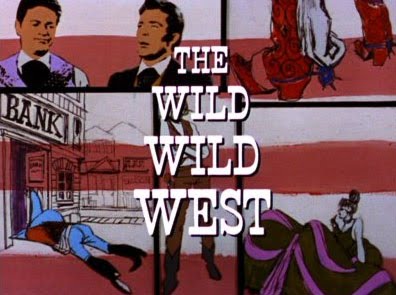
Rerun Junkie– The Wild Wild West

Three in the afternoon was a dead zone for me. There really weren’t any reruns that I wanted to watch, so I’d usually just put on Me-TV until my next round came on, putting the TV on mute and listening to the radio (oldies, of course) while I worked and waited.

It just so happens that The Wild Wild West is on at three. And after several weeks of looking up to see what was going on and being completely baffled by what was onscreen, I turned on the sound. That didn’t always help, but what I did find was a new rerun for me to love.

The Wild Wild West

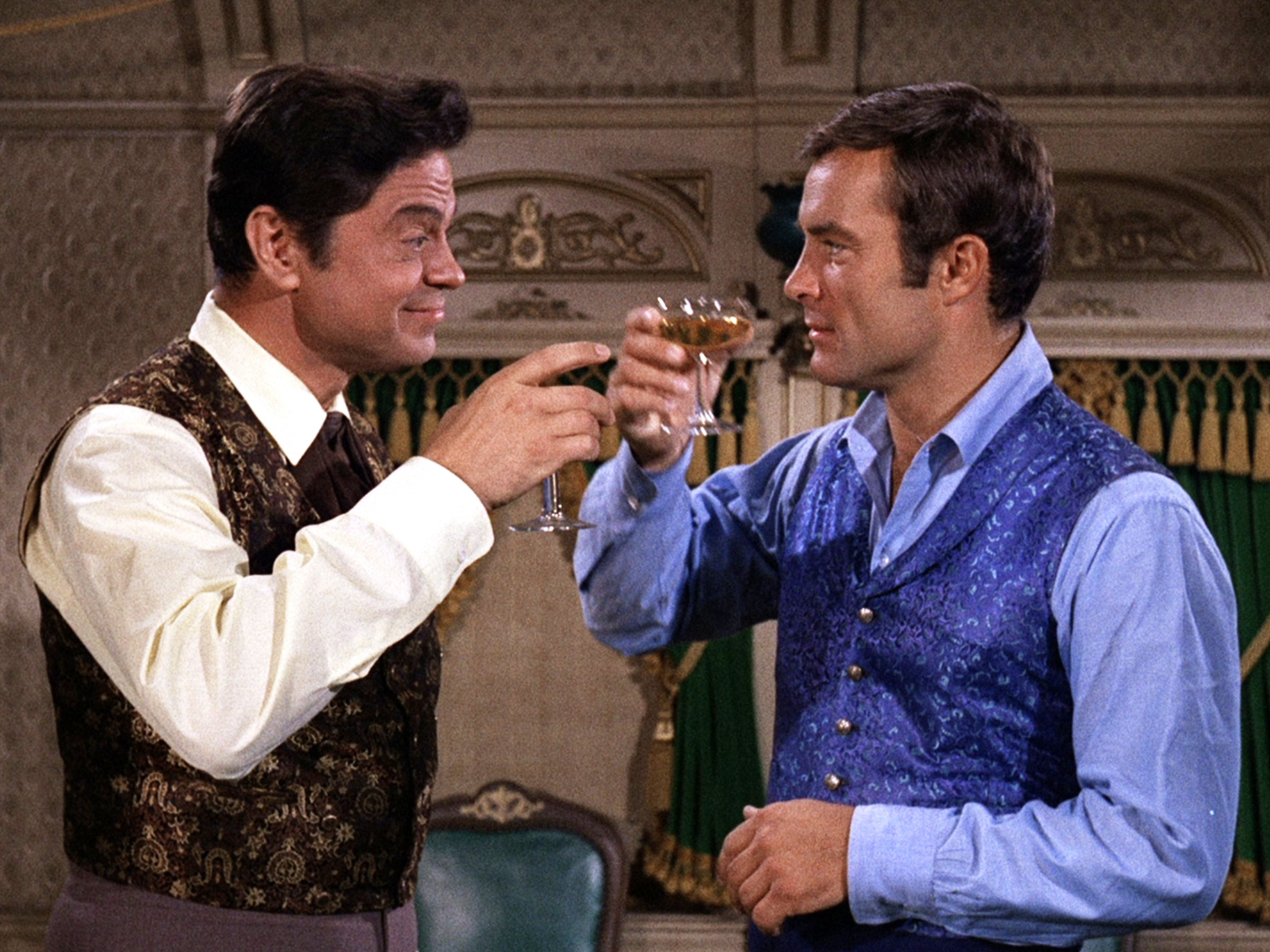
The show features secret service agents James West (Robert Conrad), our dashing and daring hero, and his partner Artemus Gordon (Ross Martin), a master of disguise and gadgets, as they do the bidding of President Grant in the 1870’s, protecting him and the country from various fiends and schemes. They travel the country on a special train that’s stocked with every gadget they might need, most of which didn’t come into existence until after the time. And no matter how busy they were saving the country, they always found time to romance a girl or three (seriously, I don’t know how they found the time to do their sworn duty with all the tail they got). It’s a Western with a steampunk/Bond flavor.

The one real repeated villain the show had was Dr. Miguelito Loveless (Michael Dunn), a brilliant but dangerous and slightly mad man who often went to toe to toe with James West and though his plans were often spoiled, he always managed to get away. He was usually accompanied by his companions Voltaire (Richard Kiel) and Antoinette (Phoebe Dorin). Oh, and Dr. Loveless just so happened to be a little person.

Though the show was primarily an action gig, there was comedy supplied from the wit and quips of James and Artemus, usually poking at each other. It added a nice balance to all the death defying and saving of the country. The chemistry between Robert Conrad and Ross Martin is really quite delightful and makes the episodes without Mr. Martin more noticeable (Mr. Martin had a near-fatal heart attack during the fourth season and was replaced by Charles Aidman, Alan Hale Jr., and William Schallert for several episodes while he recovered). The replacement agents were all fine, but they just weren’t Artemus Gordon.

They can also pull off fringe and chaps without looking like pro-wrestling gimmicks.

It’s also worth noting that since this is an action show, the two leads did get in on that action. Mr. Conrad did most of his own stunts until he fell 12 feet from a chandelier and sustained a concussion that ended filming on season 3 a couple of weeks early. Mr. Martin also broke his leg during an episode a few weeks before having his heart attack (though I don’t think he did quite as many of his own stunts as Mr. Conrad). Something you don’t see much of today.

In addition to our favorite villain and fellow agents, other guest stars included Victor Buono, Suzanne Pleshette, Robert Loggia, Harold Gould, Dabs Greer, Boris Karloff, Carroll O’Connor, Burgess Meredith, Ida Lupino, Ricardo Montalban, Robert Duvall, Ed Asner, Harvey Korman, Martin Landeau, James Gregory, and Leslie Nielsen.

This show is fun. Along with the wit and the action, you get some really nifty gadgets, complicated, diabolical plots, James West goes shirtless every other episode, and Artemus Gordon gets to be a dozen different people on any given day. What’s not to love?

Cheers!
Cheers!


Where I Watch It

Rerun Junkie– “Hookman” Old and New

WARNING: SPOILERS! For both episodes, though you’ve had 35 years to watch the original one, so really, you’ve got no legitimate bitch.

Hawaii 5-0

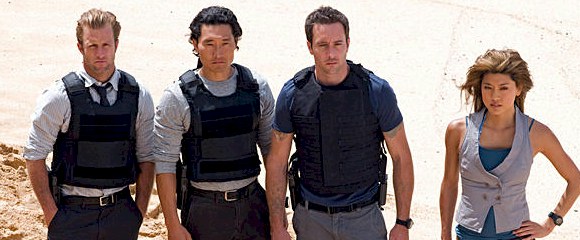
Let’s get a few things out of the way right from the beginning. This isn’t going to be a battle between the two series to see which one is better. It’s not going to be that kind of comparison. It’s just for my own amusement to see how the new one redid the old one. That’s it. And it should also be noted that I’ve only seen one episode of the new Hawaii Five-0 and that was because Ed Asner was reprising his role from the original Hawaii Five-O. So my knowledge of the new series is minimal at best, but I do have a basic understanding of the new cannon by way of the Interwebs and it seems the show is very respectful in many ways to the original and I can appreciate that.

So, with that out of the way, let’s get this showboat on the river.

In the original episode, a double amputee with hooks for hands (played by actual double amputee Jay. J. Armes) shows some deft dexterity in assembling rifles, engraving little name plates, and, oh yeah, shooting the cops that were involved in the bust up of a bank robbery that cost him his hands. Naturally, Steve McGarrett is on that hit list.

In the new episodes, a double amputee with robo hands (played by Peter Weller…aka…RoboCop) also shows some deft dexterity in assembling semi-automatic weaponry, engraving names on bullet casings, and, oh yeah, shooting the cops that were involved in the bust up of a bank robbery that cost him his hands. Naturally, this Steve McGarrett is on that hit list because his father was one of the cops and, well, he’s dead now and someone needs to pay this vengeance tab.

The episodes are quite similar. Tip of the hat to Mr. Weller, who directed the episode. He did a great job of making the new version so like the old version, including shooting in some of the same locations. The opening sequence is nearly shot for shot like the original which put me, the Rerun Junkie, into a good mood right off. I was please to see how much of the original was basically just updated, but kept for the new version.

Now, of course there are differences. Different times, different technology, different cannon, there has to be.
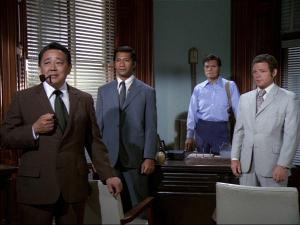
Old Hawaii 50 CastFirst of all, there’s the cast. And I’m not talking about Kono being a woman, though I am talking about Kono. The original “Hookman” aired during the 6th season. Kono (Zulu) departed in the fourth season and was replaced by Ben Kokua (Al Harrington), so Ben instead of Kono helped bring down Hookman.

There was more personal drama shown in the new version. In the original, Jack Lord got it across with a few words and some inflection that this was personal business on a certain level, not just because fellow officers were being killed, but because they were friends of his. That’s how much of the personal drama was done on the old show, shown throughout the investigation in little ways. The new show devoted a couple of whole scenes to the personal drama.

The new show also dedicated a whole scene to showing Hookman hooking up the ex-con with the weapon that he used in the shootout that Hookman used to kill his second victim. In the original, you didn’t see any of that. We found ourselves at a shootout with Danno, thinking they had the sniper (the ex-con was a white, kinda redneck looking guy in the original). Both guys were smoked out and killed and both Ookala’s were mistakenly thought to be shot by the ex-con and then later it was revealed to be incorrect, though in the original it was after autopsy instead of on-scene.

Speaking of the victims, the first two are the same in the original and new version, Keoke and Ookala, but in the original, the third victim is Thompson who is killed off-screen, not Duke, who is wounded off-screen. (Or, as I say whenever he appears on-screen in the original Duuuuuuuuke!)

Since the new Hookman was leaving behind engraved casings instead of rifles with engraved nameplates (you can’t just leave behind weaponry at crime scenes these days, people will swipe them; back then you could leave just about anything lying around with no worries, guns, kids, cars, whatever), McGarrett and Danno ended up going to a gun shop instead of a jeweler’s to get shot at, a sensible change. New Hawaii 50 Cast
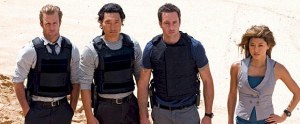
Finding the Hookman ended up being different, too. In the original, they deduced that a double amputee probably didn’t have a whole lot of job options so he probably lived in the poor part of town. That sort of thing probably isn’t considered politically correct today and double amputees probably have more job opportunities today than they did in the 70’s anyway. It was a mailbox record that led them to Hookman in the new version.

The one big complaint I have about the new version is the final raid and shootout, yet another difference. In the original, McGarrett goes into Hookman’s apartment alone and looks around in complete silence. He sees the engraving equipment, the police radio, the plaques on the walls with the news paper clippings with the bold headlines of the killed cops. Then the phone rings, breaking the silence. It’s startling because the tension builds so gradually you don’t notice just how tense it’s getting.

The new version was a rush to the ending. The search of the apartment was conducted by everybody, the phone ringing wasn’t nearly as jarring, there was no opportunity for tension, which is a shame.

The final shootout went down pretty much the same way with the exception of there being no Ben to draw fire (seriously, McGarrett’s like, “Ben, on the count of five, stick your head out and get shot at so I can get to the car”) and Kono taking the kill shot instead of Danno. And then there was Hookman’s death. In the original, the rifle fell to the pavement while Hookman flail-collapsed on the roof. The rifle smashed and there was this moment of McGarrett looking at this gun with his name on it. It had a serious emotional weight to it.

In the new version, Hookman smashed to the pavement and the emotionally weighted moment was reserved for McGarrett talking to his dead father and the two dead officers and I was kinda like, Bzuh? Is this his thing? Does he often see his dead dad at the end of the day? I don’t know. Like I said, I don’t watch the show, so it’s entirely possible that this moment could be quite poignant. But I really liked the poetic feel of the original ending better.

However, don’t confuse my disappointment in the ending with dissatisfaction. As much as it bummed me out that the endings weren’t more alike, the similarities they did keep in the episode were quite pleasing. The O’s in the engravings were the tip-off. Mr. Weller did a wonderful job as Hookman (even though he talked more than the original) and the similarities in the apartment and the engraving scene were fabulous. Also the little things, like the ex-con falling over the railing after being shot, a green mustang being used as Hookman’s getaway car, the hand left hanging onto the steering wheel, those little details showed just how dedicated they were to really doing the episode right and doing it with extreme reverence to the original. All the credit in the world for that kind of care.

I’m actually quite pleased with how the new version stacks up against the original. I really didn’t think they’d do as well as they did.

I do believe the folks running the new Hawaii Five-0 have a rerun junkie in their midst. And I appreciate that.

Rerun Junkie– Emergency!

When Me-TV announced its fall line-up and announced they’d be showing Emergency! I was excited. A 70’s show that I had vague knowledge of, but had never seen! Yes!

Exclamation points!
Exclamation points!

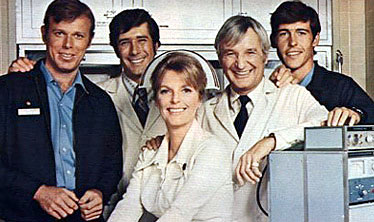
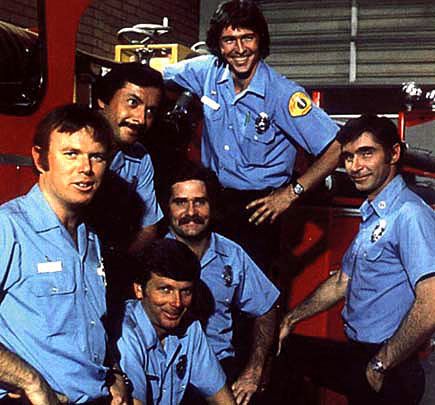
Emergency focused on two paramedic fire fighters, John Gage (Randolph Mantooth) and Roy DeSoto (Kevin Tighe), in the fledgling paramedic program and the doctors and head nurse in the emergency department at Rampart General Hospital, Dr. Kelly “Kel” Brackett (Robert Fuller), Dr. Joe Early (Bobby Fuller), and Nurse Dixie McCall (Julie London). Gage and DeSoto were usually joined by their fellow firefighters at Station 51: Captain Henry “Hank” Stanley (Mike Norell), Chet Kelly (Tim Donnelly), Marco Lopez (Marco Lopez), and Mike Stoker (Mike Stoker). Many times they were joined at the scene by Officer Vince (Vince Howard). The emergency room staff were also aided by the capable, but sometimes harsh Dr. Joe Morton (Ron Pinkard).

Our heroes!
Our heroes!

The show was a real ensemble and the episodes did a good job with that concept, following pretty much the same formula. The opening established the story line for the show and was usually followed pretty quickly by the firefighters responding to their first call of the show. From there, between calls and patients at the hospitals (some more comical than others), the story line was worked out until a resolution at the end, usually following a big rescue of some kind. Some episodes focused more on the paramedics/firefighters and some focused more on the emergency room staff, but the overall show maintained a pretty good balance of both.

Being the 70’s, there was no shortage of familiar faces popping up on the show, including Adam West, Jo Anne Worley, Ruth Buzzi, Dick Van Patten, Grant Goodeve, Mark Harmon (as an animal control officer in a possible pilot), Jamie Farr, Robert Alda, Marion Ross, Sharon Gless, Tony Dow (Wally turned to crime in this ep), Larry Manetti, Joyce Jameson, Dabbs Greer, Melissa Gilbert, Nick Nolte, Ron Masak, John Travolta, Yvonne Craig (Batgirl, to you), Linda Gray, Linda Dano, and Jack DeLeon (Marty Morrison from Barney Miller).

Look, ma! Firefighters!

One really cool thing about the show was the use of real firefighters in the cast. In the first season real LACoFD Captain Dick Hammer (as himself) headed Engine 51 (he was followed by John Smith as Captain Hammer before Mike Newell took over as Captain Stanley). LACoFD Mike Stoker was with the show for its run. And the oft-heard, rarely-seen dispatcher was LACoFD dispatcher Sam Lanier.

The inclusion of the real firefighters in the show lent to the realism of the whole shebang. I realize there are mistakes in the rescue, response, and ER scenes. But as someone who is not an authority on 1970’s paramedic/firefighter/doctor/nurse procedures, those scenes look legit (except for the lack of blood in some scenes; they are a bit clean on this show). I find some of the big rescues at the end of the episodes pretty spectacular to watch because they feel real. I don’t feel like I’m looking at multiple takes of something. I’m watching two paramedics jumping into the ocean to get a guy out of a sinking helicopter. I’m watching two doctors examine a guy with internal injuries. There’s nothing forced or staged-feeling about it (usually).

And if you’re viewing this like a bit of film from a time capsule (as I like to do with my reruns), it’s wild to basically watch the infancy of the paramedic program that we’ve all grown very used to today. It’s also pretty wicked to see the ginormous walkie talkies the firemen use and the box of phone (bio-phone) that the paramedics use to call Rampart Hospital.

When I first started watching the show, I admit that I found John Gage to be a little annoying and I had doubts that I was going to be able to put up with him. But after a few episodes, he grew on me and the interaction between him and Roy DeSoto is wonderful. There’s a great chemistry there. Also, Chet Kelly has one of the greatest mustaches ever to grace a fire department and he holds a special place in my heart now. Watching Nurse McCall keep Dr. Brackett and Dr. Early in line is great fun.

If you’re looking to be hips deep in personal drama like on Grey’s Anatomy or ER, look elsewhere. The characters do have their stories, but nothing soap opera-ish. Which I appreciate. There seem to be streaks of characters getting injured. Obviously, that’s part of the risk of being a firefighter, but I swear Gage got hurt three times in one week during the big rescue at the end. Of course, anyone injured is usually back the next episode feeling fine.

Some of the most believable calls/rescues/patients are the most ridiculous ones. The family that thinks their mother is dead but she’s only napping, the guy who thinks he’s been cursed, the guy who accidentally glues his hands to a model ship, but doesn’t want the ship destroyed to unglue his hands, the girl that gets her head stuck in a chair (okay, that wasn’t on the show; I really did that when I was a kid). You  have no idea how many calls first responders get that are really like this. The truth is stranger than fiction and this show definitely captures that with some of the absurd incidents. But, like I said, the way those scenes are done, you go right along with it.

It’s the big, dramatic incidents that I sometimes have trouble with. I’ll read the episode summaries and be like, “A plane crashes into an apartment building? Come on!” And then I’ll watch the episode and be like, “A plane crashed into an apartment building! Help! Help!” It’s all in the delivery, I suppose.

I could be easily impressed, too. Always a possibility.

Either way, this show became a quick favorite and I hope it sticks around on my TV for a long time. I need the opportunity to watch these episodes a few times.

Keep up the good work, Chet.


Where I Watch It

2013: Getting Louder

Electronic red megaphone on stand.

My goal for 2013 is to be louder.


I want to be louder about who I am and what I want and what I’m doing.


I want to be louder in my support of my friends and the really cool things they do and the cool people they are.


I want to be louder in my support of my family, too.


I want to be louder about needing help and support.


I want to be louder about being a writer.


I want to be louder about being a Rerun Junkie.


I want to be louder about being a bad fan.


I want to be louder about being a fat girl.


I want to be louder about being a fat girl belly dancing.


I want to be louder about my fashion sense.


I want to be louder about getting what I want.


I want to be louder about having a good time.


In short, I want 2013 to be one hell of a noisy year.


Rerun Junkie– The Rockford Files

The theme song is easily in my top five of all-time favorite TV theme songs.

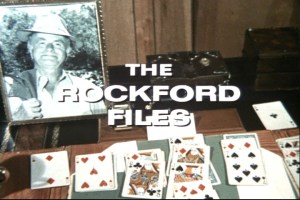
The Rockford FilesThis was one of those shows I watched at my grandma’s house on the all awesome-detective show network (okay, not really; it just seemed like these shows were all on the same channel, but they were all awesome). It was right up my alley. A 70’s detective show. I didn’t realize then how much I would love that specialization, but I’m sure The Rockford Files had something to do with it.

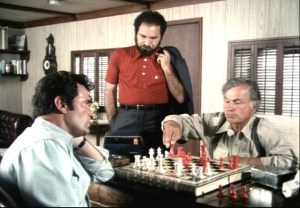
Jim Rockford (James Garner) is a private investigator that drives a kicky Firebird, lives in a trailer at the beach, tries to talk his way out of physical confrontation, and keeps a gun (for which he does not have a permit) in a cookie jar. He did time in San Quentin for a crime he didn’t commit and was pardoned for. His father Rocky (Noah Beery, Jr.) does his best to get Jim to find a safer line of work, but usually gets drawn into his cases (or brings some to him) anyway. Jim also has a friend from prison, Angel Martin (Stuart Margolin), that tends to bring trouble to his trailer door, usually due to his scheming. His lawyer (and sometimes girlfriend) Beth Davenport (Gretchen Corbett) and Sgt. Dennis Becker (Joe Santos) help him out of more jams than they get him into.

Trouble with a capital T.

There wasn’t much glamour in Rockford’s private investigator life and his pursuit of cases (missing persons, minor insurance scams, and closed cases so he doesn’t have to deal with cops working open ones) in order to earn a living sometimes got him into trouble. That was pretty much the whole point of the show. Rockford would end up working on cases full of trouble and then he’d have to find a way out while solving the case.

Despite Rockford not being fond of getting into physical altercations, it seemed like he got into at least one an episode, more than once getting the crap kicked out of him. Definitely a different take than other detective shows in which the star in question rarely got roughed up. Rockford also seemed to have to evade trouble (or chase trouble) in his gold Firebird, scenes that loved to feature what became known as the J-Turn or “Rockford”, a move used by the secret service which involves driving backwards, turning the wheel sharply to spin the car around in a 180 and then slamming that sucker into drive. I don’t know how he never dropped a transmission doing it, but he’s a man that makes off the rack suits look great, so there you go.

As for guest stars, this show had them including several recurring characters. They included: Louis Gossett Jr., Isaac Hayes, Dennis Dugan, Tom Selleck (before he was Magnum, he was Lance White, the perfect PI), Kathryn Harrold, James Whitmore, Lauren Bacall, Harold Gould, Sharon Gless, Ned Beatty, Joan Van Ark, Linda Dano, Joe E. Tata, Gordon Jump, Noble Willingham, Stacy Keach Sr., Carmen Argenziano, Bill Mumy, James Sikking, Abe Vigoda, Veronica Hamel, Hector Elizondo, and (for the Dallas and Halloween II fans) Hunter von Leer.

My favorite episodes were the ones with Angel. He’d always end up getting Rockford in trouble somehow, usually because he was in trouble and needed help, and while Angel was sniveling and whining and scheming, Rockford would spend the entire episode fed up and at his wits end.

He looked like this a lot, too.

I loved the Rockford/Angel relationship. Their back-and-forths were some of the best. I also adored the father/son relationship between Jim and Rocky. One of my favorites.

It’s a great show. I could use a Jim Rockford in my life.


Where I Watch It

Rerun Junkie–Batman

A couple of decades ago when I spent large chunks of my summer at my grandma’s house because I had my own room, could watch baseball from the hot tub on her deck, and got channels that I didn’t have at home, I was introduce to the wonder and marvel that is Batman.

na na na na na na na

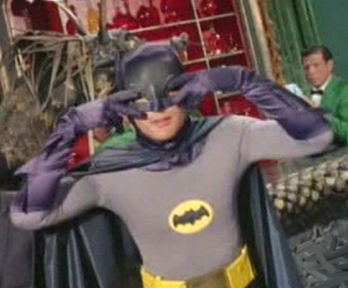
Batman was obviously based off of the comic book of the same name and featured Bruce Wayne (Adam West) and his young ward Dick Grayson (Burt Ward) fighting crime as the Dynamic Duo Batman and Robin. Loyal butler Alfred (Alan Napier) dusted the Batcave and helped keep their secret from the world, including Dick’s Aunt Harriet (Madge Blake). They’re summoned via Batphone and Batsignal by Commissioner Gordon (Neil Hamilton) and Chief O’Hara (Stafford Repp) at the first sign of a super criminal as the Gotham City police force apparently only employed the cops that weren’t capable of fighting crime much worse than traffic violations.

The super criminals in question included of The Joker, The Riddler, Catwoman, The Penguin, Mr. Freeze, Egghead, The Puzzler, Clock King, King Tut, Bookworm, Olga Queen of the Cossaks, Black Widow, Zelda the Great, Shame, Ma Parker, Mad Hatter, Marsha Queen of Diamonds, The Archer, and Louie the Lilac. Some of these were villains in the Batman comics, others were villains from other comics, and still others were made up or re-imagined for the show.

The super villains typically came to Gotham with an unbelievable crime planned and once their presence was detected, Batman and Robin would try to thwart them. Inevitably, Batman and/or Robin would get caught in a trap which would lead to them nearly dispatched by some elaborate super hero killing machine the villain came up with. However, they’d always manage to escape at the last possible second and end up catching the bad guy in the end. This drama played out over two episodes shown on consecutive nights for the first two seasons, but was cut down to one during the third and final season.

The costumes, the bright colors, the clever camera angles (the villain scenes were all filmed at a slant because they’re crooked, you now), the BAM! ZAP! BIFF! during the fight scenes, the breathless narrator (Same Bat-Time! Same Bat-Channel!), and sometimes (okay, lots of times) corny dialogue made it quite comic book-like and of course, ramped up the camp factor. And if there’s one thing pop culture loves, it’s camp.

Batman’s utility belt, his penchant for labeling everything at bat-whatevers, and Robin’s holy exclamations had staying power when it comes to clever pop culture witticisms.

Holy WTF, Batman!

As silly as this show is, it was the show to be on back in the day. The guest stars weren’t doing this gig because they didn’t have anything else going for them; they did it because they were clamoring to be on the show. Hard to believe, I know, but think of it as the precursor to the people that show up in SyFy movies that you don’t think should be there (William Katt? Why are you here and why are you wearing your mother’s glasses?).

Guest stars included Cesar Romero, Burgess Meredith, Frank Gorshin, Julie Newman, John Astin, Eartha Kitt, Art Carney, Ethel Merman, Joan Collins, Shelley Winters, Milton Berle, Victor Buono, Cliff Robertson, Carolyn Jones, Vincent Price, Eli Wallach, Tallulah Bankhead, Jill St. John, Anne Baxter, Doodles Weaver, Rudy Vallee, Glynis Johns, Ethel Merman, Lesley Gore, Liberace, and Roddy McDowell.

Demand to be on the show was so great, that “window cameos” were created. As the Dynamic Duo climbed up the side of a building (walked along the floor holding onto a rope with strings holding their capes out while the camera filmed sideways), a celebrity would pop out of a window. Those cameos included Sammy Davis Jr, Jerry Lewis, Don Ho, Colonel Klink (Werner Klemperer), Lurch (Ted Cassidy), Edward G. Robinson, Dick Clark and Art Linkletter.

Batman and Robin were joined in Gotham City by the Green Hornet and Kato (Van Williams and Bruce Lee) for an episode (they also appeared once in a window) which led me to nearly explode with glee. In the third season, Barbara Gordon, commissioners daughter and Batgirl (Yvonne Craig), was added to the regulars. Her lace trimmed Batgirl Cycle is truly a sight to behold.

While I love most of the villains, if I’m hard pressed to choose a favorite, I have to go with King Tut. Joker, Riddler (Frank Gorshin version), Penguin, and Catwoman are all fabulous, but Victor Buono brings that added oomph to the camp that I just adore.

This show is so much fun and it never seems to get old, no matter how many times I watch it.

I admit that when I say I’m busy on Saturday nights, what I mean is I’m watching Batman.

Batusi, baby.


Where I Watch It

Rerun Junkie– Cannon

My love of 70’s cop/detective shows is legend, but it wasn’t until my house acquired MeTV that I discovered the brilliance that is Cannon.

The opening features a lot of circles I’m assuming to be cannon balls.

Cannon stars William Conrad as private detective Frank Cannon, a former police detective that retired from the force after his wife and son were killed in a car accident, which wasn’t fully dealt with until the final season of the show, which ran five years. The opening features theme music, lots of colored dots and circle cropped pictures, and finally a voice over that tells you you’re watching Cannon starring William Conrad. It then goes on to list the guest stars and the title of the episode. I have no idea why, but I find this neat.

Anyway, the episodes are pretty much the same in the since that Cannon gets hired on a case or stumbles into a plot or is otherwise drawn into helping the needy and defeating the forces of evil, usually with karate chops. Really. The man used more karate chops than Bruce Lee.

Cannon took quite a bit of abuse in the course of his investigations. He’d get beaten, shot, hurt in car accidents. I don’t know how many shirts he ruined from blood due to head wounds. Or the blood of others. He engaged in quite a few fights and was rather agile for a big man.

Not your typical action hero.

Oh, yeah. When most people picture a hero, he’s not usually as wide as he is tall, but Cannon broke that stereotype. There were still plenty of fat jokes to go around, though, if not by others then little self-deprecating quips about himself. But to be fair, Cannon had to be big. He was a big personality that liked big things. Big cars. Big meals. Big paydays.

Guest stars on the show were a fun parade of all things 70’s, either people on the way out or on the way up. Clu Gulager, William Daniels, Willie Aames, Nick Nolte, Robert Loggia, Martin Sheen, Tina Louise, Paul Michael Glaser and David Soul before they were Starksy and Hutch, Micky Dolenz, Joan Van Ark, Leslie Nielsen, Harold Gould, Shelley Duvall, Mike Farrell and Wayne Rogers before M*A*S*H, Lee Meriweather, Robert Hays, and Tom Skerritt all put in some face time on Cannon.

Oh, do you like Barnaby Jones? Thank Cannon. It’s a spin-off. Don’t know what Barnaby Jones is? It’s the show that helped people think of Buddy Ebsen as someone other than Jed Clampett. Maybe we’ll discuss it another day.

I admit that sometimes the show is a little unbelievable sometimes (KARATE CHOP), but Cannon is a fun character. He can be very serious, almost menacing at times. But with the people he likes, he’s quite funny and has a great smile.

Those end scene freeze frames at the end of a show were made for those chubby cheeks.


Where I Watch It

Rerun Junkie– Little House on the Prairie

Everyone watched Little House on the Prairie during the 70’s/early 80’s. Well, except me. I was handicapped by the fact that I wasn’t born until 1980 and when the show went off the air, I was just figuring out that commercials weren’t TV shows and Scooby Doo was the best thing in my world.

However, this show has been re-running in my area since it ended it’s first run, so it’s not like I’ve been deprived of it. In fact, I’ve probably seen the first ten minutes of every episode. Why? Because that’s exactly how much of the show we could watch before we had to leave for school. And as far as I was concerned, that was ten minutes more than I wanted.

You read that right. I didn’t like the show.

This caused me displeasure.

In fact, I so didn’t like this show as a kid, that I went out of my way to avoid it as I aged (we can’t say “matured” without risking my pants suddenly igniting) into an adult.

Until my local rerun supplier changed it’s line-up. Instead of Hawaii Five-O at 2, I ended up with Little House on the Prairie and there was nothing else on at the time (because 16 episodes of Bonanza a day is excessive and that’s all I had to choose from when this all started). So I left it on, but I didn’t like it.

And like a point-of-view monster waiting to spring on an innocent, young girl, this show clubbed me over the head and now I’m knee deep in the reruns and loving them for all the wrong reasons.

Everyone knows this show, but let me recap for those like me who have gone out of their way to avoid it. The show is based off the books of the real Laura Ingalls Wilder (I managed to avoid reading those as a kid, too; really didn’t like this show when I was young). It features Charles Ingalls (Michael Landon) aka Pa, Caroline Ingalls (Karen Grassel) aka Ma, Laura “Half-Pint” Ingalls, later to be Wilder (Melissa Gilbert), Mary Ingalls, later to be Kendall (Melissa Sue Anderson), and Carrie Ingalls (Lindsay and Sidney Greenbush). Later the family added Grace (Brenda and Wendi Turnbaugh)  and adopted children Albert (Matthew Laborteaux), Cassandra (Missy Francis), and James (Jason Bateman) because the Ingalls collected children like I collect baseball cards.

The town included Isaiah Edwards (Victor French) and his family; Jonathan Garvey (Merlin Olsen) and his family; Doc Baker (Kevin Hagen); Reverend Alden (Dabs Greer); Laura’s husband Almanzo (Dean Butler) and his sister Eliza Jane (Lucy Lee Flippin); Mary’s husband Adam (Linwood Boomer, creator of Malcom in the Middle); Hester Sue Terhune (Ketty Lester), blind school helper and waitress; and the Olesons, Nels (Richard Bull), gossip Harriett (Katherine MacGregor), always-in-the-corner Willie (Jonathan Gilbert), and Nellie (Alison Arngrim), who set the standard for bad girls everywhere.

Such a lovely, conniving face.

Of course, I’m over-simplifying the town because it changed a bit over the years, people coming and going and whatnot. But those are probably the most familiar of the faces.

Well, the ones I could pick out of a line-up, anyway.

The Prairie was a popular place for guest stars, too. Louis Gossett, Jr., Billy Barty, Ray Bolger, James B. Sikking, Ernest Borgnine, Ernie Hudson, Burl Ives, Madeline Stowe, Red Buttons, Johnny Cash and June Carter Cash, James Cromwell, Gil Gerard, David Faustino, Anne Archer, Todd Bridges, and Anne Ramsey all did time on the show.

It was most definitely a family show, preaching love, faith, kindness, tolerance, compassion, generosity, and helping your fellow man. But it wasn’t afraid to kill anybody, either. Alice Garvey (Hersha Parady), Mary’s baby, Laura’s baby, Charles and Caroline’s only baby boy, James and Cassandra’s parents, and Mr. Edwards’s son John were among the casualties over the years. Not to mention to all of the tertiary prairie characters (thanks, Television Without Pity!) that bit it, too, including a disturbing two-part episode that involved the stalking and rape of a young girl that’s conclusion looked like the last act of Hamlet (that whole episode was just a ball of WTF, really).

In fact, lots of bad things seemed to go down on the Prairie. Caroline cut her leg and got a life-threatening infection; Mary went blind (and lost her baby); Laura’s house blew away in a tornado (and she lost her baby); Mr. Edwards was crippled in a logging accident; Carrie fell down a mine shaft; the Garvey’s barn was always on fire and Andrew (Patrick Laborteaux) got roughed up a couple of times more than anyone else; James was shot in the gut and in a coma; Albert…what didn’t happen to Albert? He was a travesty magnet.

Nellie also underwent a complete personality 180 when she met her husband Percival (Steve Tracy), which was a weird thing to be sure, but they were so cute together and Percival always took it to Harriett which was fun, so I really can’t complain.

I haven’t seen all of the episodes yet, though I’ve been watching it now on two channels. I have yet to fully enjoy the Jenny (Shannen Doherty) episodes. I’ve still got a bit of catching up to do, for sure.

And as disgusted as my younger self might be at the notion of me watching the show at all, I really don’t mind.


Where I Watch It

Rerun Junkie–Barney Miller

That opening baseline. That opening shot of the New York skyline. That eclectic bunch filling a rundown squad room. Do you know what I’m talking about? Even if you don’t, you’ll be humming it soon enough.

Barney Miller is a 70’s classic, running from 1974 to 1982, that took place in the detective’s squad room of the 12th precinct in New York City. Cops cite the show as one of the most realistic cop shows to be on TV. It showed the funny, ridiculous side of crime. While other cop shows dealt with the more serious crime like murders and drug rings, Barney Miller and company dealt with blind shoplifters, philosophical bums, and purse snatching stockbrokers. And they did it all while dealing with staff shortages, budget cuts, and a poorly working toilet.

Though they occasionally tackled heavier subjects (racism, homicide, rape), the show mostly centered on the detectives getting by and dealing with a host of criminals and victims just as varied and interesting as they were.

The original cast consisted of Barney Miller (Hal Linden), Stan “Wojo” Wojciehowicz (Max Gail), Phil Fish (Abe Vigoda), and Chano Amaguale (Gregory Sierra). Ron Harris (Ron Glass) and Nick Yemana (Jack Soo) were officially added as regulars by the second season. In the beginning, Barney’s wife Liz (Barbara Barrie) played a bigger role, but by the second season had diminished.

In the beginning…

The cast changed over the seasons. Gregory Sierra and Abe Vigoda both left for other series, which led to Steve Landesburg as Arthur Dietrich and Ron Carey as the long suffering Officer Carl Levitt joining the show. James Gregory also joined as Inspector Frank Luger. Jack Soo passed away in 1979 and was never replaced.

…at the end.

The integration of the new characters was pretty smooth. It felt like what would happen at a real precinct. People get transferred or retire and new people move in. Personalities didn’t have to be replaced. This kind of show called for individuality. And it allowed for growth.

Barney was the wise leader, gifted with compassion and a desire to do the right thing. Wojo started off as kind of a thick-skulled muscle head, but over the seasons revealed a big heart and actually showed some growth. Harris was a styled intellectual with a gift for writing and a love for the stock market. Dietrich was also an intellectual, but he was more of a walking encyclopedia with a wit so dry it could be used for kindling. Chano was a street smart guy that never failed to go out on a limb to get his job done. Nick hated filing, made terrible coffee, and had a love for gambling. Fish may have acted like life was the pits, but he dreaded enforced retirement and even kidney stones couldn’t keep him off the job. Inspector Luger was always going on about the good ol’ days, but he always had his detectives’ backs. Officer Levitt longed to be a detective and was enthusiastic about his job, but was often overlooked (he felt because he was short).

The great part about the show was that the guest stars were as much fun as the detectives and many of the actors were on several times as different characters. Peggy Pope, Oliver Clark, Don Calfa, Florence Halop, Sal Viscuso, Doris Roberts, Michael Tucci, A. Martinez, Phil Leeds, and Christopher Lloyd were all on multiple times.

They also had some great recurring characters. Jack DeLeon and Ray Stewart as Marty and Mr. Driscoll are two of my favorites (and two of the few gay characters on at the time). They also had Florence Stanley as Fish’s wife Bernice, Stanley Brock as Bruno Bender, George Murdock as Lt. Ben Scanlon, and Jack Somack as the often robbed Mr. Cotterman.

So many of the episodes are fan favorites, such as “Hash” in which Wojo brings in brownies made by his girlfriend and the detectives eat them not knowing that they’re laced with pot, and “Werewolf” in which Kenneth Tigar brilliantly plays Stefan Kopeckne who believes he’s, well, a werewolf (he comes back in an episode in a later season as the same character, this time believing he’s possessed by a demon). All of the episodes are quotable. My personal favorites (that I watch over and over again online) are “Smog Alert”, “Rain”, “Hair”, “Group Home”, and “Bus Stop”. And of course, “Jack Soo, a Retrospective” is a touching, out of character episode reflecting on Jack Soo and the character of Nick Yemana after Jack Soo passed away from cancer. When they raise their coffee mugs to him in the end, it’s a guaranteed tear jerker.

Also, the last scene of the series is probably one of the best done in television. No gimmicks, no tricks, just turning off the light and closing the door.

The female cops were few and far between (Linda Lavin, June Gable, and Mari Gorman all did time at the 12th), but that never bothered me much. I’d rather have an all male cast than a woman shoehorned in just because they think they have to have a woman in there. Those cases never end well. (For the record, I didn’t care much for Linda Lavin’s Detective Janice Wentworth, but I did like June Gable’s Detective Maria Battista and Mari Gorman’s Officer Rosslyn Licori.) And not all of the serious material was handled well (“Rape” is an incredibly awkward and uncomfortable episode, even more so now because of just how differently things are handled and viewed now as opposed to how they were then).

But the shortcomings are easily overlooked (particularly if you just skip “Rape” all together, which hurts me to say it since Joyce Jameson is in it and I love her). Despite the 70’s suits and references, there’s a timeless quality to the stories and the jokes. Granted, you probably couldn’t take a bomb into a New York police department so easily today (it happened at least four times during the show that I can remember off of the top of my head), but we can relate to the budget cuts and the layoffs and trying to do right even if it is against the rules.

Not to mention the desire for a cup of coffee and a decent toilet.


Where I Watch It