Poem–Magnificent Seven–“Billy Rocks”

Poetry punishment is back, but lucky for you, this poem marks the half-way point.

I adore Billy Rocks. A man of few words and brilliant knives, he’s a loyal friend to Goodnight Robicheaux. We’re introduced to Billy through Goodnight, who explains that he had a warrant for Billy’s arrest, but when he saw him easily taking care of a room full of men, he knew he couldn’t arrest him and they’d been partners ever since, making a living by betting on Billy’s skills against the unsuspecting.

Though Goodnight had a warrant for Billy’s arrest, it’s implied that Billy’s less an outlaw and more a victim of circumstance due to his race. He wouldn’t be whooping everybody’s ass all over here and there if they kept their racism to their damn selves. And though there’s definitely some racism in regards to Vasquez and Red Harvest, it’s explicitly pointed out in Billy’s backstory.

I love Billy’s friendship with Goody. As a result, that ended up being the main theme of his poem.

I chose the sijo poetic form for Billy’s poem. It’s a Korean form that’s meant to be sung. It’s three lines with 14 to 16 syllables per line. The first line introduces the subject, the second line develops it, and the third features a twist and conclusion. The syllable breakdown per line traditionally is 3-4-4-4, 3-4-4-4, 3-5-4-3, and there’s supposed to be a pause in each line.

Did I do all that? Well, mostly. I think I got pretty close.

I got my point across, anyway.

Billy Rocks

Miles and years away from his birth, his face a stranger.
His blades carve himself a partner, notch himself a place to belong.
His home is a grave with his dearest friend his closest neighbor.

Let Me Tell You About Tinkerbell

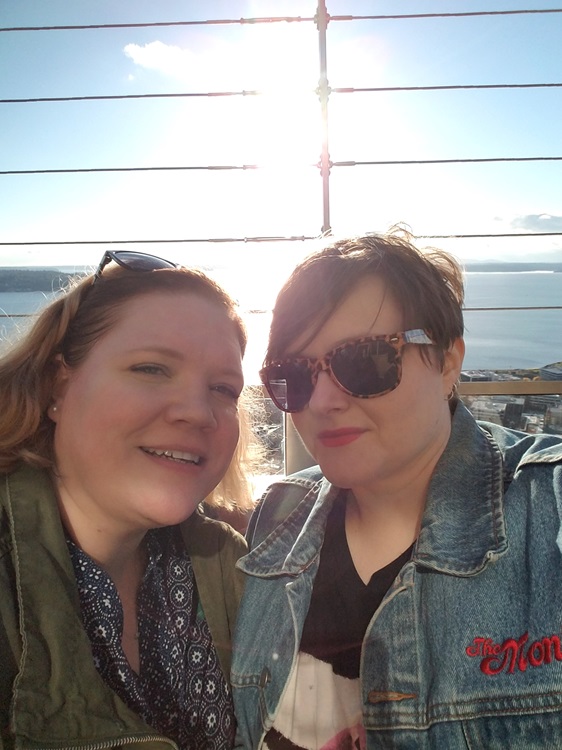
Carrie, my good friend for 20+ years and my roommate for 15+ years, unexpectedly passed away on December 1st.

Carrie and I met through the Lord of the Rings fandom back in the long, long ago of LiveJournal. We spent hours chatting on AIM and she flew out for a visit in 2004 (I think). A few years later, Carrie was in need of help. Plagued by depression and anxiety (as well as undiagnosed autism as we later discovered), she was struggling to survive on her own in Buffalo, NY. I offered her a place to stay in the cornfield and help to get her life back on track. She accepted. I drove 12 hours one way in a rented van to help her relocate her life. Her stay in the attic room was only supposed temporary. She never left.

Moving out here was a rough adjustment for Carrie. She went from living alone to living with two other people. She was afraid of my dad at first. Understandable since he was a police officer. He’s used to be intimidating even when he’s not trying to be. And Carrie’s history had left her easier to intimidate than most. She went from barely coming downstairs, especially if I was at work and only my dad was home, when she first got here to coming down for daily chats with my dad while she made tea as part of her routine in the last year.

Therapy was a big part of Carrie’s growth out here in flyover country. She had a few therapists, but her last connected with her the best. She really helped Carrie heal many of her old wounds and better manage her triggers. She was also key in getting Carrie on the medication that helped her function in life better. Their relationship was cut short thanks to state budget cuts that closed the mental health clinic in town, but Carrie still found a way to build on that progress and continue to improve.

Between the therapy and the support, Carrie really came into her own. She went to community college for a while, studying art. She took better care of her health and happiness. She learned to stand up for herself, assert herself, and set boundaries. She reconnected with her family and made several trips back home, including a solo road trip, something she never would have been able to do before. We went to DragonCon in Atlanta; took the train to Milwaukee for a weekend trip; and flew to Seattle for five days of exploring a city in the part of the country that Carrie adored. She always wanted to live in the Pacific Northwest.

We had a lot of long talks that covered everything from hopes and dreams to fears and nightmares to stories that made us cry to stories that made us laugh until we couldn’t catch our breath. She loved talking about her family, particularly sharing memories about her grandparents and the summers she spent with them, aunts, uncles, and cousins at Keuka Lake. One thing her family and mine had in common was a love of games, particularly card games. She always said that she believed in Heaven and in her version, her grandparents were playing cards with other beloveds who had passed.

Carrie became a valuable part of our family. My nieces claimed her as another aunt. She took the youngest one to Disney World. She was shocked to find that she had gifts waiting for her at her first Christmas at my great-aunt’s. She wasn’t quite sure what to make of that rowdy bunch as we ate a whole lot of food and then played loud cards, but she had fun. It was an early wake-up time for her and that house gave her a headache, but she loved going to Thanksgiving and Christmas there. She mourned my grandpa and great-aunt with the rest of the family just as though she’d known them her whole life, too.

A lover of animals, Carrie devoted time and money to animal causes. As much as she loved her make-up and skincare, she made an effort to switch all of her products to cruelty-free brands, a habit which rubbed off on me. I’m not completely cruelty-free yet, but I’m getting there. Carrie never shamed me for not making the switch, but applauded me whenever I did. She understood the struggle. After all, she had always wanted to go vegetarian, but could never quite achieve it. She did reduce her meat consumption quite a bit, though.

Her love of animals extended to our own, inside and out. I always say that any animal that comes within a block of this house will get spoiled. Our cats, the neighbor’s cats, the neighbors’ dogs, squirrels, possums, raccoons, mice, whatever, Carrie was one of the biggest spoilers. Her big heart made her a soft touch. She was our point person when it came to the vet, taking them for their yearly trips and any other necessary visits. It was a hassle wrangling them into their carriers and driving them to another city, but she was happy to do it. Nothing mattered more than the kitties being well-taken care of. Of course, this translated into her doing nightly squeezies for the Addams Family and spoiling her cat Antoinette (she called her Baby) to the point that she admitted that she created a monster. She wouldn’t have had it any other way, though.

Carrie’s generosity extended to humans, too, especially the ones she lived with. If we needed anything, she’d do what she could to help. She didn’t mind picking up my slack and bailing me out of more than one jam that I’d gotten myself into it. She was unfailing in her support for my writing and once she learned not to push too much (you can tell me twice before my spite kicks in), Carrie was good at nudging me to do better at taking care of myself.

She had an affinity for Tinkerbell, anything with cats, monkeys, apes, or sloths, and the color blue. She loved murder mysteries, Jane Austen, and anything relating to England, particular the Tudor period. We had many common interests and likes, but the royal family wasn’t one of them. We had totally different fashion styles (even if we’d been the same size, we wouldn’t have shared clothes) and rarely read the same kinds of books or watched the same kind of movies. But we never missed an episode of What We Do in the Shadows or Ghosts, and even though I stopped watching General Hospital, she kept me up-to-date on the latest storylines. I’ve listened to more A-ha than I would have thanks to her love of them (“The Sun Always Shines on TV” was her favorite song). She learned more than she ever wanted to know about Hawaii Five-O and The Monkees thanks to me.

Was it all rainbows and unicorn farts? Of course not. We had our spats and disagreements. We buried a yard full of hatchets. We got on each other’s nerves. But family does that.

My biggest regret is that the last couple of months of Carrie’s life was so hard. Despite a recent hand surgery, she was right there to pick up the slack with me as we dealt with my dad’s health problems. Then she fell down the stairs. She had a hard couple of weeks after that, but she was finally beginning to rebound from it.

And then she was gone.

It’s been a difficult adjustment not having her here.

Which is kind of funny when you remember that this was all supposed to be temporary anyway.

You’re playing cards beyond the horizon now, my friend.

Unofficial NaNo 2024 Failure…Or Was It?

As I explained at the beginning of the month, I was prepared to do an unofficial NaNo for reasons, using it as an opportunity to put Stateline into its third form. Everything was on track to do the thing.
And then life went pear-shaped.

I’m not talking about the election fallout, though that did dampen my motivation somewhat. I was able to write through it back in 2016, though I admit my final first draft is one hell of a mess that I should revise, but don’t want to wade into because I know how much rewriting awaits me.

Anyway, no, this “make plans and God laughs” insult was leveled at me on a personal level. Eventually, I’ll get to the point where I can recap it, but until then, I need you to accept on blind faith that everything went to hell.

My initial reaction was to flail, to find a way to keep my word count up at all costs, forgo sleep and run myself into the ground to make it happen. That’s what good writers do. They persevere no matter what.

Blessedly, in the nick of time I remembered I’m not a good writer.

I also took a critical look at my motivations and circumstances. I had to ask myself why I was so intent on winning an unofficial NaNo, especially when I had nothing left to prove. I’d done twenty NaNos prior to this and won most of them. Without bragging, I can honestly say that I know how to write 50,000 words in a month and that I can do it. What do I gain by making myself write all of those words during an incredibly stressful period of my existence? More stress? When I already have too much? No thank you.

This led to a surprisingly mature and intelligent decision from myself. I know. I was shocked, too.

I decided that I was not going to write 1,700 words a day in order to ensure I wrote 50,000 words this month. Instead, I decided that I was going to write a manageable number of words every day this month. I thought it was going to be 500 words a day, and I managed that for a week, but then ended up reducing that to a minimum of 100 words a day. If I could write more than that, great. Otherwise, I wasn’t going to be beat myself up for slow progress.

So, I may not get 50,000 words written this month, but I will at least finish thirty days with some words written and I need to learn how to be happy with that when life decides to take it sideways.

In a curious, unexpected twist, there was also a poem-a-day challenge going on this month, which I decided to participate in because it would be easy to catch up if I missed a day or two. Once everything went tits up, I found that writing a poem to fit the day’s theme was a bright spot in all of the stress. It was something I looked forward to and made writing my words a lot easier.

It turns out that the challenges of November weren’t really of the writing kind at all.

Poem–Magnificent Seven–“Vasquez”

It’s time for your monthly punishment of poetry.

I had the form for Vasquez’s poem chosen before I had an idea of what I was going to write. He’s an interesting character in that of the Seven, he is unquestionably an outlaw. Chisholm has a warrant for his arrest and trades his freedom for his participation. We glean a little of his character -he’s proudly Mexican and his granddaddy fought at the Alamo (maybe killing Goodnight Robicheaux’s granddaddy at that same battle, which, as Goodnight says, is a charming thought)- and he’s quickly established as Faraday’s frenemy, but we’re never explicitly told what he’s done that landed his warrant in Chisholm’s hands. Judging by the way he handles his gun and his pride, I’m guessing it’s murder-related.

But our Mexican outlaw must have a heart of gold, or at the very least some kind of honor, to go along with Chisholm’s plan to defend the town from a guy doing way worse than Vasquez would ever dream.

For his poem, I decided on an Espinela, named after the form’s creator Vincente Espinel. It’s a ten line poem broken into two stanzas with four lines in the first stanza and six in the second. There’s eight syllables per line and the rhyme scheme is abba/accddc. One of the easier forms I chose for the Seven.

Also, I got to use the word “loam”. A criminally underused word, in my opinion.

Vasquez

The writ claims he’s a wanted man,
his survival against the law.
His life a wound opened and raw.
Taking whatever edge he can.

Unaware of a change in plan.
The path he crosses on his roam,
leading him to fight on the loam.
The worst he’s done put to good use.
The battle within brought to truce.
He knows the cost of losing home.

Lessons Learned from a First Draft

I finished the first draft of That’s Punk at the end of October. I started it in June of 2022 (I think). The story idea seized upon me while I was working on other things and I couldn’t get it out of my head. I ended up blasting out the outline for it one night, thinking that might get it out of my system enough that I could concentrate on my other projects again.

It didn’t work.

I ended up coming to sort of compromise with the story eating my brain. I would write it on Sundays, writing as much or as little as I wanted and revising as I went along. This was new for me. I usually write a first draft as fast as I can and deal with the carnage later during the revisions.

This was how I proceeded for over a year. I took my time. At one point, I even went back to the beginning and revised everything I had written. I’d never done that with any other first draft.

After the big revision, I realized that it was time to start wrapping it up, but doing it quickly would not happen. I had too much left to write and too many other projects going on. For much of 2024, I was working on four podcasts as well as revising What Happened to the Man in the Cabin?, which needed a lot of work. Months of work. I didn’t have a lot of time to commit to a big daily word count. I settled on at least 500 words a week. It didn’t matter when I wrote them or how much I wrote at one time, as long as I hit at least 500 words a week. It wasn’t a lot, but it was consistent progress and that had to be good enough while I was busy.

The small, but mighty steady progress paid off. By the time I finished revising What Happened to the Man in the Cabin?, I was in a good position to made a real push towards the finish line. I went from at least 500 words a week to at least 500 words a day, usually more than that. The 2,500+ words I wrote a week rushed me along. I had given myself until the end of 2024. One final push had typing “the end” before the end of October.

The one concession I made in my bid to get the first draft wrapped up before the end of the year was that I stopped revising as I went along. Once I started making a set word count, I stopped looking back. It was full steam ahead. This may or may not hurt me when it comes time to revise the whole thing, but I’m not going to worry about that until I get there.

What I ended up with by writing a first draft this way was the longest thing I’ve ever written. That’s Punk clocked in at over 145,000 words. I never thought I’d ever write anything this long. I also learned something about trying new methods of writing. That fast as lightning brain dump of a first draft works, but so does slow and methodical. Some projects I can afford to have the patience on. Maybe next time, I’ll actually give myself a chance to do the revise-as-I-go thing for the whole trip. Or maybe I’ll try a whole new approach to getting a first draft done.

Even if nothing ever comes of That’s Punk in the long run, I’ve learned some valuable lessons that I can apply to future projects.

And maybe something will come from one of them.

Unofficial NaNo 2024

As I mentioned previously, I’m still planning to write 50,000 words this month, but I’m not officially participating in NaNo.

This year’s project is called Stateline. And it’s actually been something I’ve been working on for over a decade (probably closer to two) in one form or another.

Stateline began its life as a short story that I wrote in my late 20’s. Three cousins -Julian, Silas, and Amelia- take a midnight trip to ditch the body of Julian’s neighbor and nemesis, Glen, across the the state line after Julian kills him in self-defense. This version of the story featured the protagonists being in their late 20’s and only scratched the surface of their issues, both with each other and with themselves.

In my 30’s, I reworked Stateline as a script. Or at least, a script treatment with only fifteen pages and a synopsis submitted to a contest, which placed fifth. This version aged the characters along with me, putting them in their 30’s and 40’s, creating more of an age difference and more of an affectionately antagonistic relationship between the cousins. The treatment also better defined the cousins’ issues and the bullying/harassment that led to Glen’s demise.

And now here I am in my 40’s, reworking Stateline as a novel. The characters are getting another age-up, putting them in their 40’s and 50’s, in part to keep them in line with me since that’s become something of a tradition now, but also because I find something intriguing and fun about middle-aged fuck-ups. Their issues have evolved and the trip to the state line has gotten longer. After all, bladders are different over 40.

I’m looking forward to seeing how this project translates to a novel form. I’m anticipating the first draft to be a short one, most likely finished in 30 days and not much beyond 50,000 words, but we’ll see. I may just surprise myself.

I think spending my November on a road trip with these three will be a good time.

Unofficial NaNo

This year, NaNoWriMo is going to look different for me.

Yes, I still intend to write 50,000 words during the month of November. However, I’m not officially participating in NaNoWriMo.

Earlier this year, the folks at NaNoWriMo issued a statement in support of generative AI, which resulted in something of a controversy, as well it should. First of all, the whole point of NaNo is for people to sit down and write a 50,000 word novel. That’s it. It doesn’t matter if you consider yourself a writer. It doesn’t matter if everything you write is absolute garbage (it’s a first draft, so there’s a real good chance of this, actually). The point is that you put your ass in the chair and you write the words. What is the point of having generative AI do that for you? You’re not writing shit. You might as well not even participate. You’d be putting in the same amount of effort. Generative AI goes against the whole point of the entire purpose of NaNo. Having the folks at NaNoWriMo support it is like fucking for chastity here.

But I suppose if you’ve got a couple of AI companies as your sponsors, you’re going to say nice things because money is always in your best interest. Never mind that it comes from people who want to put writers out of business.

The NaNo folks also tried to say that generative AI was like a disability aid for writers, which writers with disabilities quickly shut down. AI isn’t what those writers use or need to write their stories. And if I may be so bold, being unwilling to write that great idea isn’t a disability. The worst writers among us could write better drivel than what generative AI has proven to come up with. You can achieve that dull, mediocrity on your own.

Then there’s the whole thing about how generative AI is based on theft (mining the works of other people without credit or compensation or permission), it costs people jobs, and it destroys the environment. No supporting clarification statements are going to undo that knowledge.

In the end, I cannot in good faith continue to support this organization that was once beneficial and that now has been corrupted by the greed and avarice of late capitalism. It’s difficult to exercise morals in this hellscape, but fuck it, I’ll die on this particular hill.

After twenty NaNos, I really don’t need the crutch of their daily word count graph and the reward of their little gifties in exchange for a donation anymore. It doesn’t need to be November for me to write 50,000 in thirty days anymore. If I’m going to be honest, I don’t even need to write 50,000 words in 30 days anymore. I’ve mastered the art of completing first drafts in a wide range of time spans. NaNo was just something to look forward to every year, a month of unbridled writing for the sake of writing, a guaranteed time to work on and/or complete the draft of a project.

And now it’s not.

So, I’ll make my own.

Read This If–You’re Looking for a Romance with a Halloween Vibe

Are any of these books actually Halloween romances? No. But they do contain a ghost, a witch, and a not-quite-ghost. That’s close enough for candy corn in this case.

My recommendations, my rules.

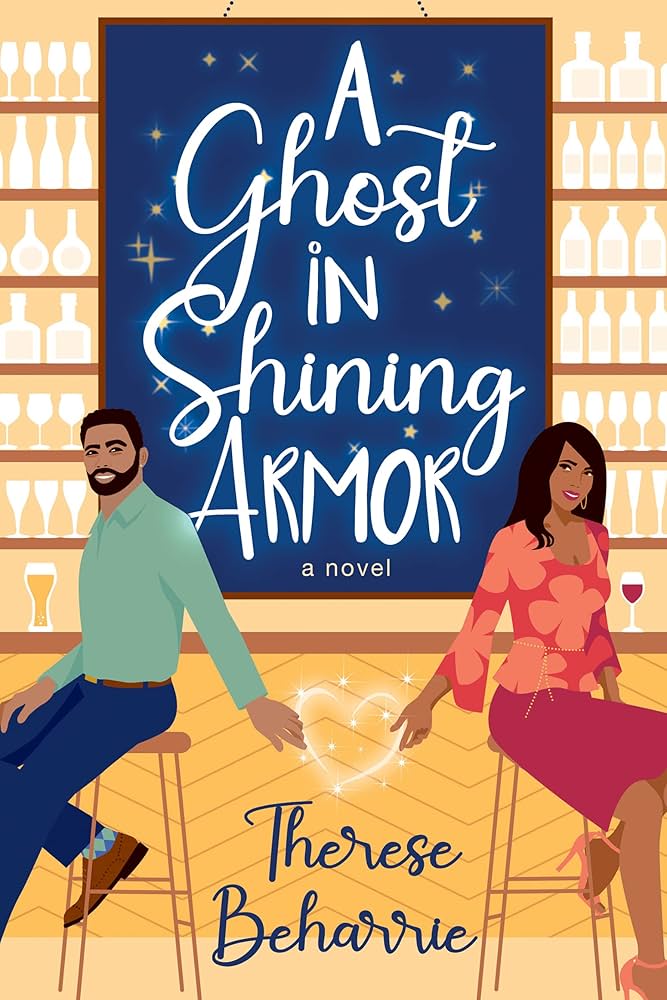
A Ghost in Shining Armor by Therese Beharrie–Gemma Daniels has the ability to see ghosts and she likes to help them settle their unfinished business. Which is good because the stranger she kissed on a bet was actually a ghost and her kiss turned him solid. Now Levi has a second chance at life if he helps Gemma reunite with her long-lost sister. Meanwhile, Levi has some sibling issues of his own that Gemma wants to help him work out. And there’s the whole being super attracted to each other business, which is kind of a problem given the whole ghost thing.

I admit that I suffered from a lot of secondhand embarrassment while reading this book. Gemma is not at all logical when it comes to her plans to introduce herself to her long-lost sister, who happens to be an author. There’s a lot of family drama involving adoption, responsibility, and people pleasing. I was hooked on the ride of Gemma and Levi’s romance, trying to figure out how it was going to work out. Because it’s a romance. There has to be a happy ending. Spoiler alert: there is. There’s also some pretty steamy scenes. Who knew ghost sex could be so satisfying?

The Very Secret Society of Irregular Witches by Sangu Mandanna–Mika Moon is one of few witches in Britain. As a rule, witches aren’t supposed to mingle or be open about their witchy-ness, but Mika likes to post videos of herself pretending to be a witch because she’s sure no one will take her seriously. Until one day, someone does. She’s summoned to Nowhere House to teach three young witches how to control their powers. Breaking the no mingling rule, Mika takes up the task, which moves her into Nowhere House and into the not-so-good-graces of Jamie, the Nowhere House Librarian who is very protective of the girls, which is something they have in common.

This is such a sweet romance. Mika and Jamie are inevitable, but it’s lovely watching them fall for each other, challenging their own hang-ups in the process. The three witches Mika is charged with teaching are feisty and adorable. And the girls’ guardian makes me think of Ian McKellan. There’s a bit of a mystery and an outside threat because we need to have some stakes, but it all ties in beautifully. It’s an enjoyable read.

One Last Stop by Casey McQuiston–August is living her cynical life in New York City, living with weird roommates and working at a 24 hour pancake diner when she has a chance encounter with a gorgeous woman on the subway. Jane isn’t like other girls. Literally. She’s displaced in time and stuck on the subway train. August is determined to help Jane get back to her time, but the more time she and Jane spend with each other, the harder it will be to let her go.

I loved this book so much. It was different and engrossing and I loved all of the characters. There were drag parties and subway sex and tragic histories and punk rock and laugh out loud lines. I wanted to live in this book. With a premise like this, though, it’s hard to see how the happy ending is going to happen, but the conclusion is a satisfying one.

I hope these books fit your spooky season romance vibe. And if they don’t, haunt someone else.

Poem–Magnificent Seven–“Faraday”

Yes, it’s only been a minute since the last poem, but I’m struggling with my schedule right now. If I have to suffer, so do you.

This was the second to the last poem I wrote for The Magnificent Seven experiment, and I’ll be honest, Faraday is my least favorite of the Seven. Chisholm was last because he brought the Seven together and it seemed appropriate to write everyone else’s poems before his. Faraday, though, I procrastinated. I struggled to tell his story.

I chose deibide baise fri toin as his poetic form, which is an Irish quatrain form. One thing I learned about Irish poetry forms is that they have a lot of rules. The rules of this form are four line stanzas (or the whole poem is four lines), rhyme scheme is aabb, lines one and two rhyme on a two-syllable word, lines three and four rhyme on a monosyllabic word, line one has three syllables, lines two and three have seven syllables, and line four has one syllable.

And this is one of the easier Irish forms.

I can’t say this made writing Farady’s poem easier for me, but I do think it turned out pretty okay and it might not have turned out at all without the stricter rules.

Farady

Home traded
for chips in a life jaded,
finds the good use for his gun
done.

Hopes bolster.
Dynamite in his holster.
All in, throws down his last card
hard.

I’m Not Expressing Myself Well

“That sounded better in my head.”

I’d wager that just about everyone has thought this or said it out loud. We all have those moments when we’re trying to get an idea across and the words are just not wording well. You know exactly what you’re trying to say, but you just ain’t saying it.

Man, I really hate that.

I think it’s because as someone with anxiety and as a person who tends to ruminate, I have a lot of imaginary conversations and arguments in my head, and sometimes out loud. I don’t necessarily want to have all of these conversations. Most likely, I will never have most of them. I’m either preparing for a war that I won’t have to fight or I’m reliving a battle that I already lost, saying all of the things that I didn’t in the moment because I wasn’t prepared. Or I was, but the words weren’t there when I needed them.

I don’t express myself well. Not often when I need to. Not often in the heat of the moment.

As someone who is fascinated by languages, who writes, who podcasts, who does a whole lot of communicating in her job, you would think that I would be better at this, that it would come naturally to me. You’d think I’d gotten the hang of it by now.

Alas alack, live moments don’t have edit buttons and my mouth has no backspace key.

In the unending rehearsals of rumination, I can workshop my words until I’ve got the right ones selected. I’ve got the right motivation, the right tone, the right expression. I’ve nailed the part. In the live improv that is life, I’m building sentences on the fly, influenced by my reactions and emotions and the fullness of the moon. Sometimes, the words come flying out of my mouth and leave the idea and intention behind in my brain.

These leftover intentions and ideas don’t simply disappear. They don’t fade now that the moment and the conversation has passed. No! They’re left in my grey matter to ferment and fester until I expel them in an imaginary conversation of what I should have said, a too late performance in the play I should have staged. A useless exercise because I learn nothing from it. My inner critic makes sure to point that out.

It frustrates me unnecessarily. Sure, people don’t want misunderstandings, and I’m not often misunderstood. I just don’t get my point across as effectively or efficiently as I think I should. Especially when emotion is involved. I don’t like that I lose my ability to word well when I’m irritated or agitated or caught off guard. Is this normal? Do other people experience this? Am I being unnecessarily hard on myself and getting frustrated over something that’s not really worth it? Yes, of course, to all of the above. That’s the glorious way I brain.

When I write, I have the opportunity to go back and fix my words, fix the way they’re presented, to express myself as best as I can.

I wish my mouth was afforded the same opportunity.