Words to Live By

Quotation marks

I like quotes. Real people, fictional people, doesn’t matter. I like a good, strong quote. I like a quote you can apply to your life. I’ve got my share of those. Here are a few of my favorite ones.

“Simple respect. I expect nothing more and I’ll accept nothing less.” -Margaret Houlihan, M*A*S*H

It’s the baseline for my life. I’m big on respect. I give basic level respect and I expect to get at least that in return. As I get to know you, the respect increases, but sometimes it doesn’t. Sometimes I keep in on that basic “You and I are both humans and I was raised with manners” level. And sometimes I don’t. Sometimes I decide you don’t deserve my respect, and I’m not going to give it to you. Period. End of story. I won’t treat you badly or disrespect you (unless I’m forced into that position); I just won’t deal with you at all. If you’re not worth my respect, then you’re not worth my time.

Likewise, I expect basic respect and I won’t take anything less. I won’t let you disrespect me. I won’t settle for it. I won’t stand for it. I got that sort of treatment more often than I should have when I worked in retail and I tell you what, I didn’t get paid enough to pretend it wasn’t a big deal. Customers were corrected, as nicely as possible at first, of course. Because I’m working a job that YOU think is lowly doesn’t mean you get to treat me that way. You will treat me with common courtesy and basic respect. Period. It’s up to me to earn anything more.

“My guts are not here for you to love.” -Margaret Houlihan, M*A*S*H

Another line that I apply to my general existence. You don’t have to like me. I wasn’t born for you to like me. I’m here for my own purpose and I act on my own reasons and I make my own decisions and you don’t have to like any of that. I’m not here to make you happy. I’m here to live my life and do my time and make the most out of what I’ve got and do it in my own way and if that doesn’t satisfy you, Scooter, then I don’t know what to tell you. Get used to disappointment, I suppose.

“I cannot sit here waiting for you to have an epiphany. I am losing the will to live.”Radek Zelenka, Stargate: Atlantis

I use this as a reminder because I have a tendency to do a lot of sitting and thinking and don’t always follow through on the action part. Problems are typically solved through action and granted, it’s good to attempt a solution after thinking one up, but there comes a point when you can only do so much thinking and then the doing has to start. I can’t sit around and wait for a better idea or a better option. I’ve got to run with what I’ve got and risk failure.

“Ever tried. Ever failed. No matter. Try again. Fail again. Fail better.” -Samuel Beckett

If there was every a quote for writing, this is it. If there was ever a quote for LIFE, this is it. It does me no good to go through life afraid of failing and as a perfectionist, that’s sometimes difficult for me to grasp. This quote reminds me that failure is part of life and can be the best teacher.

“The power is inside you. Nobody can give it to you. Nobody can take it away. Now go play the harp.” Michael Nesmith, The Monkees

The ultimate self-esteem boost. I don’t need anyone’s permission to be great. I don’t need anyone’s approval to be great. I can be great if I want to be and no one can stop me. In the end, I’m the only one that rules over myself. No one else.

“They can’t yank a novelist like they can a pitcher. A novelist has to go the full nine even if it kills him.” -Ernest Hemingway

A writing reminder that can also be applied to life with a little revision. I’m in it to win it, baby. I’ve to be ready to throw a complete game every time I step on the mound. (And sometimes after a particularly rough writing jag, I feel like I just threw nine innings, too.)

“Hope for the best. Expect the worst. Life’s a play. We’re all unrehearsed.” -Mel Brooks

In the end, we’re all just muddling through the best we can. Might as well make the best of it.

Writing–Slowing Down

Yield

At the beginning of February I was all fired up to take on my short stories and get them all revised and polished up and sent out. About ten days in, the whole thing blew up in my face.

I didn’t want to look these stories anymore. I felt like even though I was spending a whole afternoon one one story, nothing was changing. The stories weren’t getting better and worse, they weren’t getting done. It was some weird limbo state in which I banged my head against the words and the words kept winning.

So I took a weekend off and didn’t look at the stories. When I came back to them on that Monday, I came back with a different approach. Instead of trying to sprint through the stories and rush to get them done, which did little in the way of progress, I slowed myself down. I only allowed myself to revise two pages of the story a day and worked on two or three stories at a time. The result? Progress.

By working on just those two pages of the story, I was able to focus my efforts. I blotted out the big picture and focused on just the details of those two pages. It worked. Oh, I still didn’t get as much done last month as I wanted to, but I did get things done, something that wouldn’t have happened if I had kept up with my frantic, flailing pace.

This is something I struggle with. I get in a hurry because I want to be done. Writing isn’t a sprint, but I sometimes treat it like one. I think I SHOULD be done by a certain time and then rush to make it happen. This sort of approach might work for NaNoWriMo or the first draft of a short story, when the brain just needs to dump the words on paper. But when it comes to revisions, that’s not something I should rush myself through. That’s when I need to take the time to focus and do it write. That’s when speed is my enemy, not my friend.

Right now I’m so desperate to get things going that trying to push myself along is really holding me back. I feel like I’m so far behind everyone else and can’t catch up, but I have to remember that this isn’t a race. This is just me. And I need to do my best.

Slowing down (and more importantly focusing) will help me do that.

Now I just have to remember that.

Tornado Dreamer

A tornado near Seymour, Texas

I dream about tornadoes a lot.  I suppose that stands to reason since I live in a cornfield located in the eastern portion of tornado alley and have been ducking and covering all of my life.

Okay, that’s not entirely true. I fully admit that I’ve only ever taken cover during a tornado warning at school and at Walmart, the only job I’ve had that made me. The only other time I was at work during a warning was when I worked at Taco Bell and then we were slammed and I couldn’t take cover if I wanted to. A lot of people wanted their last meal to be a gordita, I suppose.

I haven’t taken cover in my own house since I was a kid (and I was the only one that did). My parents, hell everyone on my block, would go to the window or go outside whenever the sirens sounded. We still do. Twenty-five years ago, when the warning system wasn’t the greatest, false alarms were the norm and a seeing-is-believing attitude was adopted. It’s become so normal to me that if the warning siren goes off and I’m told to take cover, I get anxious because I can’t SEE what’s going on.

I’ve been on the computer playing Word Whomp while a tornado touched down a mile from my house. I’ve grilled during tornado warnings. I drove through one on the way to a bar (in my defense, I didn’t know there was a tornado; I just thought it was a really bad storm and didn’t learn differently until I got to the bar). The only precaution I take it putting on my shoes because I’m convinced a tornado won’t hit my house unless I have to climb out of the rubble barefoot.

Despite all of this, I’ve never actually seen a tornado (like I said, I drove through one without actually seeing it). But I dream about seeing them all the time. In the dreams, I’m almost never concerned about being hurt. In most of them, if I haven’t taken cover, I usually have an easy time of doing it. And then as I’m watching the twister do its thing, I tell myself that this time it’s not a dream. This time it’s real. I’m really seeing this tornado.

Inevitably, I wake up and spoil it for myself.

According to dreammoods.com, dreaming about tornadoes could symbolize extreme emotional outbursts and temper tantrums. It could symbolize volatile situations or relationships. It could symbolize feeling overwhelmed and out of control. I suppose it could, for a normal person.

But, the wonder and awe I feel during these dreams kind of cancels those interpretations out, huh? To me, tornadoes are beautiful, amazing things, yet I don’t discount their ability to destroy anything that gets in their path. However, I feel like (particularly in my dreams) that they won’t hurt me.

It’s like swimming with sharks. They’re beautiful, but potentially lethal creatures and you have to have some confidence that you’ll emerge from the water unscathed if you’re going to get into the water in the first place.

Did I mention that I dream about sharks a lot, too?


Rerun Junkie– Little House on the Prairie

Everyone watched Little House on the Prairie during the 70’s/early 80’s. Well, except me. I was handicapped by the fact that I wasn’t born until 1980 and when the show went off the air, I was just figuring out that commercials weren’t TV shows and Scooby Doo was the best thing in my world.

However, this show has been re-running in my area since it ended it’s first run, so it’s not like I’ve been deprived of it. In fact, I’ve probably seen the first ten minutes of every episode. Why? Because that’s exactly how much of the show we could watch before we had to leave for school. And as far as I was concerned, that was ten minutes more than I wanted.

You read that right. I didn’t like the show.

This caused me displeasure.

In fact, I so didn’t like this show as a kid, that I went out of my way to avoid it as I aged (we can’t say “matured” without risking my pants suddenly igniting) into an adult.

Until my local rerun supplier changed it’s line-up. Instead of Hawaii Five-O at 2, I ended up with Little House on the Prairie and there was nothing else on at the time (because 16 episodes of Bonanza a day is excessive and that’s all I had to choose from when this all started). So I left it on, but I didn’t like it.

And like a point-of-view monster waiting to spring on an innocent, young girl, this show clubbed me over the head and now I’m knee deep in the reruns and loving them for all the wrong reasons.

Everyone knows this show, but let me recap for those like me who have gone out of their way to avoid it. The show is based off the books of the real Laura Ingalls Wilder (I managed to avoid reading those as a kid, too; really didn’t like this show when I was young). It features Charles Ingalls (Michael Landon) aka Pa, Caroline Ingalls (Karen Grassel) aka Ma, Laura “Half-Pint” Ingalls, later to be Wilder (Melissa Gilbert), Mary Ingalls, later to be Kendall (Melissa Sue Anderson), and Carrie Ingalls (Lindsay and Sidney Greenbush). Later the family added Grace (Brenda and Wendi Turnbaugh)  and adopted children Albert (Matthew Laborteaux), Cassandra (Missy Francis), and James (Jason Bateman) because the Ingalls collected children like I collect baseball cards.

The town included Isaiah Edwards (Victor French) and his family; Jonathan Garvey (Merlin Olsen) and his family; Doc Baker (Kevin Hagen); Reverend Alden (Dabs Greer); Laura’s husband Almanzo (Dean Butler) and his sister Eliza Jane (Lucy Lee Flippin); Mary’s husband Adam (Linwood Boomer, creator of Malcom in the Middle); Hester Sue Terhune (Ketty Lester), blind school helper and waitress; and the Olesons, Nels (Richard Bull), gossip Harriett (Katherine MacGregor), always-in-the-corner Willie (Jonathan Gilbert), and Nellie (Alison Arngrim), who set the standard for bad girls everywhere.

Such a lovely, conniving face.

Of course, I’m over-simplifying the town because it changed a bit over the years, people coming and going and whatnot. But those are probably the most familiar of the faces.

Well, the ones I could pick out of a line-up, anyway.

The Prairie was a popular place for guest stars, too. Louis Gossett, Jr., Billy Barty, Ray Bolger, James B. Sikking, Ernest Borgnine, Ernie Hudson, Burl Ives, Madeline Stowe, Red Buttons, Johnny Cash and June Carter Cash, James Cromwell, Gil Gerard, David Faustino, Anne Archer, Todd Bridges, and Anne Ramsey all did time on the show.

It was most definitely a family show, preaching love, faith, kindness, tolerance, compassion, generosity, and helping your fellow man. But it wasn’t afraid to kill anybody, either. Alice Garvey (Hersha Parady), Mary’s baby, Laura’s baby, Charles and Caroline’s only baby boy, James and Cassandra’s parents, and Mr. Edwards’s son John were among the casualties over the years. Not to mention to all of the tertiary prairie characters (thanks, Television Without Pity!) that bit it, too, including a disturbing two-part episode that involved the stalking and rape of a young girl that’s conclusion looked like the last act of Hamlet (that whole episode was just a ball of WTF, really).

In fact, lots of bad things seemed to go down on the Prairie. Caroline cut her leg and got a life-threatening infection; Mary went blind (and lost her baby); Laura’s house blew away in a tornado (and she lost her baby); Mr. Edwards was crippled in a logging accident; Carrie fell down a mine shaft; the Garvey’s barn was always on fire and Andrew (Patrick Laborteaux) got roughed up a couple of times more than anyone else; James was shot in the gut and in a coma; Albert…what didn’t happen to Albert? He was a travesty magnet.

Nellie also underwent a complete personality 180 when she met her husband Percival (Steve Tracy), which was a weird thing to be sure, but they were so cute together and Percival always took it to Harriett which was fun, so I really can’t complain.

I haven’t seen all of the episodes yet, though I’ve been watching it now on two channels. I have yet to fully enjoy the Jenny (Shannen Doherty) episodes. I’ve still got a bit of catching up to do, for sure.

And as disgusted as my younger self might be at the notion of me watching the show at all, I really don’t mind.


Where I Watch It

Writing–March Projects

The Daffodil, the floral emblem of March

My dedication to short stories last month didn’t exactly work out as well as I’d hoped. I did manage to get four done, but only one submitted. Progress was made, but victory was not established.

Obviously, if I’m going to make my goal of getting 50 rejections this year, I’m going to continue to work on my short stories. But they won’t be the big project this month.

The focus this month will be on putting together the first draft of a personal essay I’m hoping to submit to a contest. I expect it to be difficult simply because I’m venturing into new territory (I’ve only written one other essay that I submitted to a different contest, and that was only done for the experience) and because I’m really going to be pushing myself to really put my emotions down on paper. But that’s another post for another day.

Last month, in taking a break from working on the short stories (I’ve got a post about the outcome of that, too, but for another day), I read the first few chapters of A Tale of Two Lady Killers. I was less than thrilled with the draft. But! I do have a couple of ideas that I might work on to give myself another project when the essay and short stories start to frustrate me.

March should prove to be an important month if only for the essay part. If I can put together a satisfactory first draft of it, I’m going to call that a big win.

Remembering Davy

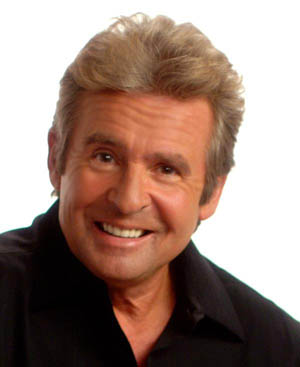
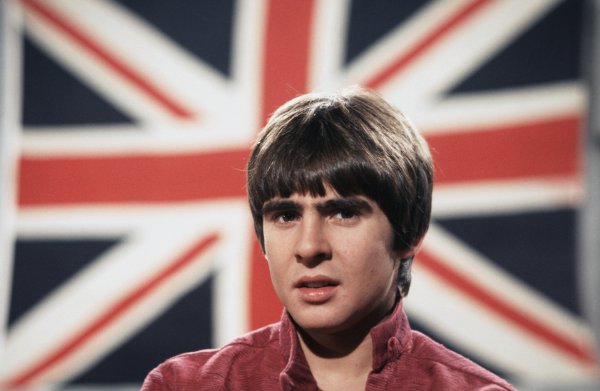
Davy Jones of The Monkees passed away on February 29, 2012 and he took with him to the great beyond my love, respect, and a little bit of my heart.

The Monkees are my favorite band. I make no secret of it and I admit it with pride. I love them. I love their TV show. I love their music. I love them individually and together.

I first became acquainted with The Monkees during their 20th anniversary tour. I was six and it was love at first sight and sound. Davy was my first favorite (over the years, they’ve each been my favorite to the point that now I can’t really pick). He was cute, he was small, he had a tambourine…what more could a six year old ask for?

Mom let me watch the show in the afternoons when everyone else had to be outside playing. I’d stay up extra late on the weekends to watch it, sneaking out of my room while Mom slept (Dad worked nights) to watch it on the TV in the living room (we only had one TV).

Then and Now: Best of the Monkees was the first tape I ever asked for. It was the first of ANYTHING I ever asked for, as I was raised by parents that didn’t abide by children asking for things every time we went to the store. But I saw the cassette among the others in the rack at Wal-Mart and I couldn’t stop myself. I asked my mother for it and instead of getting the negative answer and the lecture, Mom ended up getting it for me.

I still have that tape.

The first story I wrote (okay, maybe not the first, but definitely the first one I remember writing) involved The Monkees. Today it’s commonly known as fanfiction, but at six or seven, I had no idea there was a name for it. It was a “book” I wrote, complete with illustrated cover and big words (albeit misspelled). I was very proud of that story.

I still have it, tucked away with the papers I never want to lose.

Ten years later, I was living with Dad in housing and my parents were going through a rather bitter divorce. The typical challenges of being 16 were compounded by the war zone my parents created. Most kids hated going to school, but it was the only place I got to feel like an actual kid. At home, I was expected to be the adult.

As my luck would have it, The Monkees decided to celebrate their 30th anniversary, reminding me of the happy fun-times of my childhood. I dug that old tape out of the few things I had and it became my life raft in the stormy sea of what had become my life. I submerged myself into rediscovering The Monkees. I constructed a happy place out of their music and the show, filling it with news and stories and CDs and solo work and pictures and memorabilia and fandom.

The summer before my senior year, 1997, I worked for my cousin in her daycare. When I found out that The Monkees would be in Chicago in August, she became my partner in crime so that I could go to the concert.  Not only did she help me get the tickets, but she also took me and paid for the hotel room. The entire Monkees Trip Experience deserves to be retold in another post (and probably will be), but suffice it to say, I had an amazing time at the concert, watching three of the four men that I credited with keeping my head above water perform on stage.

My senior year is forever tied to The Monkees. I listened to Justus so much I’m surprised the CD didn’t wear out. Mom enabled my obsession, getting me a cardboard cutout of the group from a music store. Papa got me a few their CDs. My sister helped me decorate my graduation cap with the Monkees logo. I had all four of their names written on it. If it wasn’t for them, I wouldn’t have made it through high school with any sort of sanity intact (though, friends might argue the sanity part, since my graduation cap also featured “Loco 4 Life” written on it and my nickname was Skitz, short for skitzo, but I stand by what I mean).

My Monkees Happy Place was built to last and over the years, I’ve only added to it with more music (not just The Monkees, but their solo stuff as well), shows, and memorabilia. Family and friends see Monkees stuff and they think of me. I had a friend bring me a Monkeemobile model car from Canada because he saw it there and thought of me. I’ve grabbed unique items off of eBay and been able to find the not so easy to find music on Amazon. I visit it often; my iPod is full of Monkees music and on shuffle. I don’t go a day without hearing one of their songs. Bummer of a day? Nothing an episode or two can’t fix. I’m working on a collage of their album art. It’ll be really great addition to the happy place when it’s finished.

But first, I need to fix the happy place.

On Leap Day, the Universe kicked down a wall of my happy place. Davy’s death leaves a pretty big hole, one that I will patch up with memories and music and pictures. It won’t be the same, of course. But even though Davy slipped from the mortal coil and crossed the horizon into the next world, he left behind a lifetime that he shared with the world. His smile, his laugh, his voice have all been preserved. It’s not the same, but it’s not that different, in a way. At least for someone like me, a fan that only got to see the star from a distance. It’s the future that’s been compromised, not the past. He can’t do anything more, but he’s already done so much.

And he did more for me than he can ever know. Except maybe now, he’s in a place that he does. I hope he knows how much I appreciate it all.

Catch you on the flip side, Davy Jones.

On Writing by Stephen King

I believe I’ve mentioned before, at the very least in passing, that my writing bible of sorts is On Writing by Stephen King. I try to read it at least once a year. I’ve read other books on writing, but this is the one that really resonated with me.

It’s divided into two sections (okay, there’s also a postscript as well, but let’s not go splitting hairs just for the sake of splitting them). The first section, the C.V. is a biography of sorts, detailing memories and events that he believes helped shape him as a writer, or at the very least, pushed him on his writing path. The second section is the toolbox, in which he provides all of the “tools” he believes a writer needs. (If you’re curious, the postscript recounts his being hit by a van, nearly dying, and how writing fit into his recovery.)

It’s the toolbox portion of the book that really got to me, though I have to admit, I loved reading about his life (I’m voyeuristic like that). Stephen King was brought up lower middle class and that’s how he presents the toolbox. It is what it is without pretension. It was the first writing book I read that didn’t leave me feeling stupid afterwards. It didn’t leave me feeling like I was doing it wrong.

The book is very much “Here’s how I did it, here’s what I do, here’s what I think works, here’s what I think might help you, now go and work it out for yourself”. Like I said, no pretension. He acknowledges that there’s no one way or right way to writing success or even writing period. He makes me feel like not only is it okay to do it my way, but to experiment without abandon to find out what my way is. I appreciate that.

I appreciate the advice, the experience, and the straightforward way he presents the sometimes aloof subject of writing. There’s no glamour, no nose-in-the-air snottiness. It’s a job. It’s a lot of work. And if you really love it, then it’s more than worth it.

As I said before, I try to read it once a year to remind myself what I’m doing. It’s like a map. I read the book to get my bearings so I can plod on. I don’t belong to a writer’s group. I have a few writing friends, by not many. This book is my guide, which may be a little silly, but it works for me.

And thank you, Stephen King, for giving me the freedom to find out what works for me.

What You See Ain’t All There Is

What you see is what you get. That’s a good description of me provided that it’s put into the context of me not putting on airs or presenting some false version of myself. In other words, I don’t change myself to fit in with what’s fashionable.

Do I mute some personality attributes while bringing out others to better fit the group of people I’m engaging with? Sure. That’s only good sense in order to better communicate and get along with a group. But that doesn’t mean I completely alter my personality to fit in. I don’t take on new traits or completely obliterate entire bits of myself.

What you see is what you get.

But I’ll be the first person to tell you that I don’t show everything.

I’m a very secretive person. I admit that. There are just some bits of myself that I don’t feel comfortable presenting to the world, some thoughts and ideas and feelings that I think are best kept to myself.

At least I think I keep them to myself. Sometimes I feel completely transparent when these thoughts or feelings bubble too close to my surface. I think everyone can see them. I try not to panic as I try to nonchalantly push them back down, but I feel like I’m just drawing more attention to what I’m trying to hide.

These aren’t big personality flaws I’m hiding. They’re not huge, image changing ideas I’m keeping to myself. They’re just little things I’d rather keep to myself. Little secrets that I don’t think anyone else needs to know. Because while they’re not huge image changing things, they are image changing things. Little tweaks maybe that would make people see me in a slightly different light.

But I’m not comfortable with that. Not yet anyway. It’s more comfortable for me to keep the secret.

I’ve known all of this for a while, but it’s really been brought into sharper focus recently as I’ve been working on a personal essay for a contest. I’m writing about something that I’ve only ever put into words before in the privacy of my journal. I wouldn’t think to discuss it with anyone else. And yet, the prospect of having total strangers read it doesn’t bother me. I suppose that’s because they’d only be judging me on my writing, not on the content of it. And even if they did judge the content, well, they’re strangers, aren’t they? I wouldn’t have to deal with any of the aftermath, wouldn’t have to answer any questions and pretend not to be affected by the funny looks.

It’s funny how I am perfectly willing to open up a vulnerable bit of myself to someone I don’t know in the context of writing for a contest, but I’d never dream of telling my closest friend the same thing. I think it’s the emotional distance involved in the former that I find comforting. That and the only fallout I’m concerned with is whether or not I win the contest in question.

It’s not that I want to keep myself emotionally closed off from my friends and family. I’m just not good with emotions. They’re messy, illogical things (sort of like teenagers, now that I think about it), and I’m just more comfortable keeping some of mine under tight reign and out of sight.

So, I keep bits of me secret.

I guarantee that what you do see is definitely what you get, though. Position yourself just right and who knows? You might end up seeing a little more.

Writing–When the Brain Has Other Plans

I have trouble with my brain sometimes.

Here’s an example:

Last month, I got pretty tired of rewriting Spirited In Spite. It turned into quite the slog that I couldn’t wait to get through. And while I was doing this slog, all I was thinking about was how much I wanted to work on my short stories. In fact, towards the end of the rewrite and the end of the month, I did start working on my short stories as a kind of reward for getting through the rewrites.

It was easy to come to the conclusion that I was going to spend February working on my short stories.

About a week and a half into the month, I was tired of looking at these short stories (to my credit, I had three of them ready to submit and one of those I DID submit) and wanted to work on something else.

For some reason, that happens. My brain acts like a spoiled child. It gets what it wants, plays with it a minute, and then immediately wants to play with something else. It’s ridiculous and frustrating and clashes with my stubborn self and need to adhere to the goals set for me.

This time, though, I decided to compromise. After submitting one of the short stories, I took a break from them. Instead, I took the weekend and read one of my novel manuscripts (A Tale of Two Lady Killers), making some notes on it. On Monday, I went back to the short stories. The break helped me avoid the feeling of slogging. It helped me to avoid resenting the goals I’d set for myself and in the long run, accomplish them.

I have to remember that my pig-headedness is an asset only when I use it correctly. I also have to remember to be flexible with my goals. Sometimes my spoiled brat brain has a good point and maybe a day or two spent indulging it is for the best.

It’s more cooperative when I compromise.

The Addict

The same day my Twitter timeline was filled with people rallying around Josh Hamilton falling off the wagon, offering him support and informing anyone that making any joke about it was in beyond poor taste, someone else on my timeline, one of those supporters actually, complained that smoking hadn’t been outlawed in bars in Indianapolis.

And this led me to wonder…why aren’t smokers considered addicts, too?

They’re not, you know. I’m considered a former smoker, not a recovering addict. Why?

Let’s take a look at some of the common thoughts on smokers and smoking that I’ve encountered (sometimes rather loudly).

Smokers are stupid and disgusting. They smell. They’ve got nasty coughs and yellow fingers. They KNOW smoking is bad for them, but they do it anyway. It’s common knowledge. It’s all over EVERYTHING. They poison the air and contaminate other people’s lungs. They affect everyone around them. SMOKERS ARE STUPID.

Alcoholics and drug addicts are viewed like this, though. They’re to be pitied. They have a disease.

Yet they start drinking/ingesting/smoking/shooting up/snorting despite all of the knowledge of how bad it is for you. Alcoholics will reek of booze. Drug addicts will reek of other things, depending on their drug of choice. They all have health problems, some more disgusting than others. Alcoholics drive drunk; drug addicts drive high. They lie to their families. They steal from them. Poor decision making due to drug/booze affected minds leads to fights, rapes, robberies, and terminally offensive/embarrassing behavior.

But they’re not stupid. They have a disease. It’s a shame.

Nicotine doesn’t affect the brain as severely as alcohol and drugs, but it still has an effect. It still affects the chemicals of the brain. It’s still a way to self-medicate, which is what so many alcoholics and drug addicts do.

I smoked to ease stress and anxiety. No kidding. I smoked after I ate, I smoked after sex, I smoked when I drove (which was kind of a bitch because I drive left-handed and I smoked left-handed), I smoked when I wrote, I smoked when I drank, I smoked when I socialized. But I also smoked more when I was stressed. I claimed that the third cigarette on my 15 minute break was to buy me more time, but in reality, I needed the nicotine to mess with my chemicals a little more. Driving somewhere I’ve never been before? Going somewhere I didn’t really want to be? I smoked a couple of extra cigs to “calm my nerves”.

It was no exaggeration. I felt better smoking. The anxiety decreased when I was smoking. During the time that cigarette was burning between my fingers, I was much more capable to deal with life.

In order for alcoholics and drug addicts to achieve and maintain a successful recovery, they have to basically restructure their lives to learn how to live without their drug of choice. They have to learn how to function sober, avoid temptations, and sometimes they end up cutting out people in their lives that are bad influences. It also takes a lot of self-control and willpower.

I had to do the same thing when I quit smoking. I had to learn how to function without a cigarette in my hand or my mouth (I swear my pool game has suffered because of it). I had to learn to cope with stress and anxiety differently. I had to learn how to drive, write, drink, and socialize without my cancer crutch. I had the added hurdle of living with a smoker. I had to pursue my smoke-free life while watching him continue his smoking life, one that I never wanted to give up.

That’s right. If I could have kept on smoking, I would have. I didn’t quit for health reasons. I didn’t quit because I finally gave in to all of the nagging and harassment. I quit because I couldn’t afford it. It was too expensive and I was too out of work at the time.

Like a recovering alcoholic or drug addict, I think of smoking every day. I wish I could go back to it. I don’t because I don’t want to go through the unpleasantness of quitting again. I dream about smoking. If there was an option to smoke without any harmful consequences, I would do it (I’ve considered getting one of those electric cigarettes, but so far, I’ve resisted). I quit smoking about two and a half years ago and I don’t think I’ll ever not miss it.

Now, here’s the thing. I’m not looking to add any more labels to my name or anyone else’s. I’m not going to be going on talk shows talking about my smoke-free life. I’m just wondering why smokers and former smokers aren’t treated with the same kind of consideration as other addicts if we’re all addicts.

Oh, that’s right.

Smokers are stupid.