On Writing by Stephen King

I believe I’ve mentioned before, at the very least in passing, that my writing bible of sorts is On Writing by Stephen King. I try to read it at least once a year. I’ve read other books on writing, but this is the one that really resonated with me.

It’s divided into two sections (okay, there’s also a postscript as well, but let’s not go splitting hairs just for the sake of splitting them). The first section, the C.V. is a biography of sorts, detailing memories and events that he believes helped shape him as a writer, or at the very least, pushed him on his writing path. The second section is the toolbox, in which he provides all of the “tools” he believes a writer needs. (If you’re curious, the postscript recounts his being hit by a van, nearly dying, and how writing fit into his recovery.)

It’s the toolbox portion of the book that really got to me, though I have to admit, I loved reading about his life (I’m voyeuristic like that). Stephen King was brought up lower middle class and that’s how he presents the toolbox. It is what it is without pretension. It was the first writing book I read that didn’t leave me feeling stupid afterwards. It didn’t leave me feeling like I was doing it wrong.

The book is very much “Here’s how I did it, here’s what I do, here’s what I think works, here’s what I think might help you, now go and work it out for yourself”. Like I said, no pretension. He acknowledges that there’s no one way or right way to writing success or even writing period. He makes me feel like not only is it okay to do it my way, but to experiment without abandon to find out what my way is. I appreciate that.

I appreciate the advice, the experience, and the straightforward way he presents the sometimes aloof subject of writing. There’s no glamour, no nose-in-the-air snottiness. It’s a job. It’s a lot of work. And if you really love it, then it’s more than worth it.

As I said before, I try to read it once a year to remind myself what I’m doing. It’s like a map. I read the book to get my bearings so I can plod on. I don’t belong to a writer’s group. I have a few writing friends, by not many. This book is my guide, which may be a little silly, but it works for me.

And thank you, Stephen King, for giving me the freedom to find out what works for me.

What You See Ain’t All There Is

What you see is what you get. That’s a good description of me provided that it’s put into the context of me not putting on airs or presenting some false version of myself. In other words, I don’t change myself to fit in with what’s fashionable.

Do I mute some personality attributes while bringing out others to better fit the group of people I’m engaging with? Sure. That’s only good sense in order to better communicate and get along with a group. But that doesn’t mean I completely alter my personality to fit in. I don’t take on new traits or completely obliterate entire bits of myself.

What you see is what you get.

But I’ll be the first person to tell you that I don’t show everything.

I’m a very secretive person. I admit that. There are just some bits of myself that I don’t feel comfortable presenting to the world, some thoughts and ideas and feelings that I think are best kept to myself.

At least I think I keep them to myself. Sometimes I feel completely transparent when these thoughts or feelings bubble too close to my surface. I think everyone can see them. I try not to panic as I try to nonchalantly push them back down, but I feel like I’m just drawing more attention to what I’m trying to hide.

These aren’t big personality flaws I’m hiding. They’re not huge, image changing ideas I’m keeping to myself. They’re just little things I’d rather keep to myself. Little secrets that I don’t think anyone else needs to know. Because while they’re not huge image changing things, they are image changing things. Little tweaks maybe that would make people see me in a slightly different light.

But I’m not comfortable with that. Not yet anyway. It’s more comfortable for me to keep the secret.

I’ve known all of this for a while, but it’s really been brought into sharper focus recently as I’ve been working on a personal essay for a contest. I’m writing about something that I’ve only ever put into words before in the privacy of my journal. I wouldn’t think to discuss it with anyone else. And yet, the prospect of having total strangers read it doesn’t bother me. I suppose that’s because they’d only be judging me on my writing, not on the content of it. And even if they did judge the content, well, they’re strangers, aren’t they? I wouldn’t have to deal with any of the aftermath, wouldn’t have to answer any questions and pretend not to be affected by the funny looks.

It’s funny how I am perfectly willing to open up a vulnerable bit of myself to someone I don’t know in the context of writing for a contest, but I’d never dream of telling my closest friend the same thing. I think it’s the emotional distance involved in the former that I find comforting. That and the only fallout I’m concerned with is whether or not I win the contest in question.

It’s not that I want to keep myself emotionally closed off from my friends and family. I’m just not good with emotions. They’re messy, illogical things (sort of like teenagers, now that I think about it), and I’m just more comfortable keeping some of mine under tight reign and out of sight.

So, I keep bits of me secret.

I guarantee that what you do see is definitely what you get, though. Position yourself just right and who knows? You might end up seeing a little more.

Writing–When the Brain Has Other Plans

I have trouble with my brain sometimes.

Here’s an example:

Last month, I got pretty tired of rewriting Spirited In Spite. It turned into quite the slog that I couldn’t wait to get through. And while I was doing this slog, all I was thinking about was how much I wanted to work on my short stories. In fact, towards the end of the rewrite and the end of the month, I did start working on my short stories as a kind of reward for getting through the rewrites.

It was easy to come to the conclusion that I was going to spend February working on my short stories.

About a week and a half into the month, I was tired of looking at these short stories (to my credit, I had three of them ready to submit and one of those I DID submit) and wanted to work on something else.

For some reason, that happens. My brain acts like a spoiled child. It gets what it wants, plays with it a minute, and then immediately wants to play with something else. It’s ridiculous and frustrating and clashes with my stubborn self and need to adhere to the goals set for me.

This time, though, I decided to compromise. After submitting one of the short stories, I took a break from them. Instead, I took the weekend and read one of my novel manuscripts (A Tale of Two Lady Killers), making some notes on it. On Monday, I went back to the short stories. The break helped me avoid the feeling of slogging. It helped me to avoid resenting the goals I’d set for myself and in the long run, accomplish them.

I have to remember that my pig-headedness is an asset only when I use it correctly. I also have to remember to be flexible with my goals. Sometimes my spoiled brat brain has a good point and maybe a day or two spent indulging it is for the best.

It’s more cooperative when I compromise.

The Addict

The same day my Twitter timeline was filled with people rallying around Josh Hamilton falling off the wagon, offering him support and informing anyone that making any joke about it was in beyond poor taste, someone else on my timeline, one of those supporters actually, complained that smoking hadn’t been outlawed in bars in Indianapolis.

And this led me to wonder…why aren’t smokers considered addicts, too?

They’re not, you know. I’m considered a former smoker, not a recovering addict. Why?

Let’s take a look at some of the common thoughts on smokers and smoking that I’ve encountered (sometimes rather loudly).

Smokers are stupid and disgusting. They smell. They’ve got nasty coughs and yellow fingers. They KNOW smoking is bad for them, but they do it anyway. It’s common knowledge. It’s all over EVERYTHING. They poison the air and contaminate other people’s lungs. They affect everyone around them. SMOKERS ARE STUPID.

Alcoholics and drug addicts are viewed like this, though. They’re to be pitied. They have a disease.

Yet they start drinking/ingesting/smoking/shooting up/snorting despite all of the knowledge of how bad it is for you. Alcoholics will reek of booze. Drug addicts will reek of other things, depending on their drug of choice. They all have health problems, some more disgusting than others. Alcoholics drive drunk; drug addicts drive high. They lie to their families. They steal from them. Poor decision making due to drug/booze affected minds leads to fights, rapes, robberies, and terminally offensive/embarrassing behavior.

But they’re not stupid. They have a disease. It’s a shame.

Nicotine doesn’t affect the brain as severely as alcohol and drugs, but it still has an effect. It still affects the chemicals of the brain. It’s still a way to self-medicate, which is what so many alcoholics and drug addicts do.

I smoked to ease stress and anxiety. No kidding. I smoked after I ate, I smoked after sex, I smoked when I drove (which was kind of a bitch because I drive left-handed and I smoked left-handed), I smoked when I wrote, I smoked when I drank, I smoked when I socialized. But I also smoked more when I was stressed. I claimed that the third cigarette on my 15 minute break was to buy me more time, but in reality, I needed the nicotine to mess with my chemicals a little more. Driving somewhere I’ve never been before? Going somewhere I didn’t really want to be? I smoked a couple of extra cigs to “calm my nerves”.

It was no exaggeration. I felt better smoking. The anxiety decreased when I was smoking. During the time that cigarette was burning between my fingers, I was much more capable to deal with life.

In order for alcoholics and drug addicts to achieve and maintain a successful recovery, they have to basically restructure their lives to learn how to live without their drug of choice. They have to learn how to function sober, avoid temptations, and sometimes they end up cutting out people in their lives that are bad influences. It also takes a lot of self-control and willpower.

I had to do the same thing when I quit smoking. I had to learn how to function without a cigarette in my hand or my mouth (I swear my pool game has suffered because of it). I had to learn to cope with stress and anxiety differently. I had to learn how to drive, write, drink, and socialize without my cancer crutch. I had the added hurdle of living with a smoker. I had to pursue my smoke-free life while watching him continue his smoking life, one that I never wanted to give up.

That’s right. If I could have kept on smoking, I would have. I didn’t quit for health reasons. I didn’t quit because I finally gave in to all of the nagging and harassment. I quit because I couldn’t afford it. It was too expensive and I was too out of work at the time.

Like a recovering alcoholic or drug addict, I think of smoking every day. I wish I could go back to it. I don’t because I don’t want to go through the unpleasantness of quitting again. I dream about smoking. If there was an option to smoke without any harmful consequences, I would do it (I’ve considered getting one of those electric cigarettes, but so far, I’ve resisted). I quit smoking about two and a half years ago and I don’t think I’ll ever not miss it.

Now, here’s the thing. I’m not looking to add any more labels to my name or anyone else’s. I’m not going to be going on talk shows talking about my smoke-free life. I’m just wondering why smokers and former smokers aren’t treated with the same kind of consideration as other addicts if we’re all addicts.

Oh, that’s right.

Smokers are stupid.

Writing–Happy Endings

I don’t write happy endings.

Okay, I do, but I don’t.

It’s something I’ve noticed as I accumulate short stories and novel first drafts and it’s not just because I write a lot of horror. That’s not to say that I don’t write satisfactory endings in the sense that the plot is tied up and the questions are all answered because I do that. Sometimes I even do it in an a happy way. You have to offer up a satisfying conclusion if you want to write a story worth reading.

The happy endings I’m talking about are the stories that end with the girl getting the guy or the guy getting the girl. I’ve written a few stories and some novels in which that is a possibility. The set-up is there. But I don’t do anything with it. I might play a little with flirting or a smidge of sexual tension, but in the end, the characters ride off into the sunset…alone.

It seems to be an expectation for most stories involving a man and a woman that they’ll end up together. It’s an expectation I don’t live up to and I don’t live up to it on purpose.

I don’t think it’s always necessary. Just because two characters share the same story doesn’t mean they have to hook up by the end of it. Maybe they’d really like to. Maybe they do hook up at some point after the story ends. But for the time period that’s written about concerning these characters, it doesn’t happen. It happens if it’s necessary for the story and so many stories I write don’t find it necessary. And that’s okay! It’s better to serve the story rather than shoehorn something in to satisfy a reader expectation that clashes with everything else about the story.

I think that frustrates people. The last paragraph coupling happens so often that they’re disappointed when it doesn’t happen and they somehow interpret that as an unhappy ending, no matter how upbeat the story ending was. And though I have quite a few upbeat endings (I may be over estimating a little), I still manage to disappoint people.

This doesn’t bother me as much as it should. I’m satisfying people whether they want to admit it or not. Not every ending has to be happy.

Those last two sentences are filled with a lot more innuendo than I intended, but when talking about satisfying happy endings, you run into that risk.

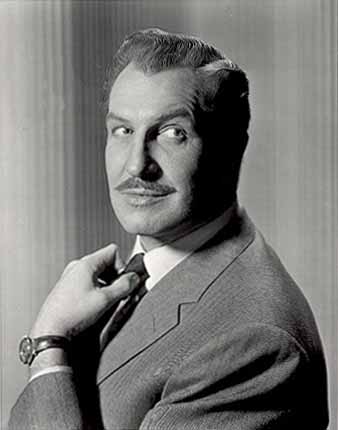
Happy Vincent Price Day!

While couples are celebrating love through jewelry extortion and single women are bitterly cursing their lack of a mate and single men are happy to be off the hook for forgetting the date, I am once again dedicating this hearts and flowers day to the one and only Vincent Price.

He's the arsenic in my champagne.

When it comes to Valentine’s Day dates, this man never lets me down.

The Single Life

By now it should be common knowledge that I’m single and have been for a while. I don’t consider it to be the worst aspect of my life (right now my dying TV is the worst aspect of my life; I’m materialistic like that), but some might think it is.

See, most of the people my age, the ones I went to school with, all followed the natural progression of getting married and having kids (okay, some had the kids first and some didn’t wait until they were out of high school to do it, but let’s not go splitting hairs). In my neck of the Cornfield, that’s just what you do. And I didn’t. I didn’t do any of it.  So here I am at 32, never been married and without kids, while some people I went to school with are on marriage number 2 and working on half-siblings for their existing kids.

And that bothers people. I guess it’s something to be pitied that I didn’t follow that natural track that they followed. Like there’s something defective about me. After all, there MUST be something WRONG with me, right? Who wants to be single? If you want to be single, you’re weird. If you don’t want to be single, but can’t land a partner, then you’re defective. Either way, there’s something wrong with you. With me.

Maybe it would be different if I dated more. At least then I’d be trying, right? But it’d still be a failure. That’s what being single is to some people. Failure.

While these people still think there’s something wrong with me, they’ve become accustomed to my singlehood. They don’t like it, but it’s what’s now considered normal for me. I am that spinster that everyone knows. And that leads to a different problem.

What would happen if I got into a relationship?

See, I’m not single because it’s the only life for me, which I believe is the common misconception people have. I’ve got this reputation for being strong and independent and being single has bolstered that because look at Christin, she doesn’t NEED a partner.

That’s true. I don’t NEED a partner. I’m happy enough being single, but that doesn’t mean that I couldn’t also be happy enough in a relationship. It doesn’t mean that I don’t WANT a relationship. It doesn’t mean that I wouldn’t one day get married if the right person asked (so far, only the wrong ones have). Being strong and independent doesn’t mean that I want to be alone. It just means I can be.

The truth is, I don’t mind being single. There are a lot of advantages to it that I enjoy. I don’t have to worry about jealousy, clashing schedules, extra laundry, warring over what to watch, or remembering anniversaries. I don’t have to worry about the other family not liking me or being forced to endure them if I don’t like them. There’s no complaining about being ignored or misunderstood, no worries about loyalty or infidelity. I just have to worry about and take care of me, and believe me when I say that sometimes I’m a handful.

That’s not to say that I don’t know that I’m missing out on the good aspects of relationships. I know that I am. And sometimes it bugs me. But not enough to march out and throw myself at the first man I find that’s remotely interested just so I can experience those things (I likely wouldn’t in a situation like that, but you know what I mean).

I’m comfortable being single. I’m okay with it. It’s not a bad thing. And if the right person comes along, then I don’t mind stepping out of that comfort zone to create a new one.

I don’t live and die by my relationship status.

You shouldn’t live and die by my relationship status either.

Writing–50 Rejections

Sometime last month it occurred to me that I should try to get 50 rejections this year.

Now let me explain.

There’s someone I follow on Twitter that counts her rejections. She tries for a lot more in the course of a year (like 150). In the course of those rejections, she does manage to get some acceptances. And after watching her do this for a year, I thought to myself, what a great idea.

So naturally, I stole it.

I need something get me going and keep me going when it comes to writing/revising/submitting short stories. It’s like I go through bursts of productivity with them, but never fully commit to the constant progress. Aiming for 50 rejections will help me do that.

In order for me to obtain my goal, I need to be more proactive. I can just rely on sudden bursts of time. I can’t let stories languish on the shelf. I can’t just stick to the horror genre to submit to, especially since it’s not the only genre I write in. I’m going to have to broaden my horizons and be more dedicated to my work.

I’ve already got my first rejection for the year (also my first acceptance) and I’ve still got four stories out. I’m on my way. Now I just have to keep moving.

This doesn’t mean I’m solely after rejections. I’m not going to be sending out any stories that aren’t ready to go just to meet my goal. The idea is that I accumulate my rejections through the legitimate act of trying to sell my stories and get published.

I admit, it’s kind of daunting sitting where I am right now. I’ve kind of got a plan in place. I’ve got stories I’m working on. I think that once I get a few more stories out and I rack up a few more rejections, I feel better about this challenge.

For now I’m just going to keep my head down, keep working, and try not to think about it.

Let’s get those rejections flowing.

Food Math

Being fat most of my life, I’ve been made aware of most diets. I know a few people that have lost their weight by counting calories or through Weight Watchers by counting points and it always made me wonder why anyone would want to turn a meal into math?

Now I find myself doing that exact same thing.

I’m working on trying to lose the forty pounds I gained after I lost it the first time. This, of course, involves exercising, but it also involves me trying to change the way that I eat. Actually, I don’t eat too poorly compared to some people, but I could always make improvements.

In my quest for better health knowledge, I stumbled on a site that calculates how man calories you should consume during a day given your activity level to lose weight. I thought it might be a good guideline for me, not that I wanted to obsessively start counting calories or anything, but if I had a general idea of how much I was consuming, it might help me lose weight.

At first, it was an interesting educational experience, especially when it came to serving sizes (really, how many people use 1/4 cup of syrup on their pancakes?) and just how much you could eat on a certain number of calories a day.

Now understand, I didn’t exactly limit myself. I just adjusted my choices to a point so the math would work out. It all worked out for the most part.

And then the guilt started creeping in.

Guilt attached to going over my “limit”. Guilt attached to still being hungry after I finished my serving. Guilt attached to that second cup of coffee.

I have a good relationship with my food. I’m not much of an emotional eater (though I will eat because I’m bored, but because I’m aware of it, it doesn’t happen very often). The self-esteem issues I have with my weight (which are intricate, complex, and contradictory) are separate from anything that has to do with food. Food tastes good. Food gives me energy. Food nurishes my body. And that’s it. I am on good terms with my food.

Which is why when the guilt started creeping in, I put a quick stop to food math. I’m not going to have a bunch of numbers ruin my relationship with food for the sake of fitting into a smaller pair of pants (or turn me against algebra). Food is not math. Food is food and needs to be treated as such.

I’m still looking at the calories and serving sizes (Really? A 1/4 cup of syrup?) of what I eat, but in a very different way. It’s not just how many calories I’m consuming, but what kind of calories I’m consuming. You know what? Sometimes I want 250 calories from a sandwich. And sometimes I want those same calories from two cookies. Neither choice is wrong and I shouldn’t make myself feel like I failed a pop quiz because of it. Being conscious of the choice and the reasons why I’m making it is more important.

There is nothing wrong with wanting a cookie now and then. There’s nothing wrong with having one.

The numbers can still add up.

Writing–February Projects

February is being dedicated to the short story now that I’m finished with the initial (and crappy) rewrites of Spirited in Spite. I’ve got this goal of getting 50 rejections this year (more on that next week) and it’s really spurned my creativity in regards to my short stories.

So here’s my short story To Do List this month:

-Revise/Polish “At 3:36” (I’ve already done initial edits in changing it from 3rd to 1st person)

-Revise/Polish “An Active Sleeper” (I think I’ve figured out how to fix this story)

-Revise/Polish “Everybody’s Time” (I wrote it at the end of last month)

-Review “Powerless” and revise/polish if necessary (It’s my first rejection of the year)

-Write “Notorious” (about the survivor of a serial killer)

-Write “Hear It?” (about a person suffering from auditory hallucinations; title may change)

-Submit any stories that are ready.

I’ve got a couple of other stories (“Anniversaries” and an untitled one) that I could revise if I get the time, but I’ve left them off the list for now simply because I’m not sure what to do to them yet. The stories need tweaking to make them work, but I’m not sure what the tweaks should be. I’m sure it’ll come to me.

Ideally, at the end of the month I’ll have at least four stories that can (and hopefully will be) submitted.

Gotta keep producing and submitting if I want those 50 rejections.